
Key Points
- China set a 2025 launch record, deploying 300+ satellites for communications, navigation, and Earth observation.
- Crewed missions at the Tiangong Space Station, including Shenzhou-20 and Shenzhou-21, demonstrated long-duration habitation.
- Tianwen-2 asteroid mission executed China’s first deep-space sample return, advancing space science.
- Chang’e-7 lunar south pole mission prepares for future crewed landings and resource surveys.
- China’s space strategy emphasizes capability building, scientific research, and international cooperation, balancing practical use with long-term planning.
1. Launch Cadence and Space Infrastructure
China’s most visible progress in recent years has been its launch frequency. In 2024, the country conducted more than 60 orbital launches, and preliminary figures for 2025 indicate a further increase. These missions placed hundreds of satellites into orbit, including Beidou navigation satellites, Earth-observation platforms, and communications spacecraft.
This steady launch cadence reflects a shift from experimental missions toward maintaining large, functional space systems that support weather monitoring, disaster response, logistics, and navigation services at home and abroad.

2. Routine Human Spaceflight at Tiangong
China’s Tiangong space station has been continuously occupied since 2022. In 2024 and 2025, missions such as Shenzhou-18, Shenzhou-19, and Shenzhou-20 focused on crew rotation, station maintenance, and scientific experiments rather than major construction.
The emphasis has moved to operational maturity. Astronauts are conducting life science experiments, materials research, and technology tests designed to support longer missions in low Earth orbit and beyond. Tiangong has also hosted international experiment payloads, signaling limited but tangible cooperation in space science.
3. Moving Beyond Earth Orbit
China is expanding its ambitions in deep space. The Tianwen-2 mission, launched in 2025, aims to collect samples from a near-Earth asteroid and return them to Earth later in the decade. If successful, it would place China alongside the United States and Japan in asteroid sample-return capability.
These missions build on earlier achievements such as Tianwen-1 at Mars and reflect a growing focus on planetary science, not just engineering demonstration.
4. The Lunar Track
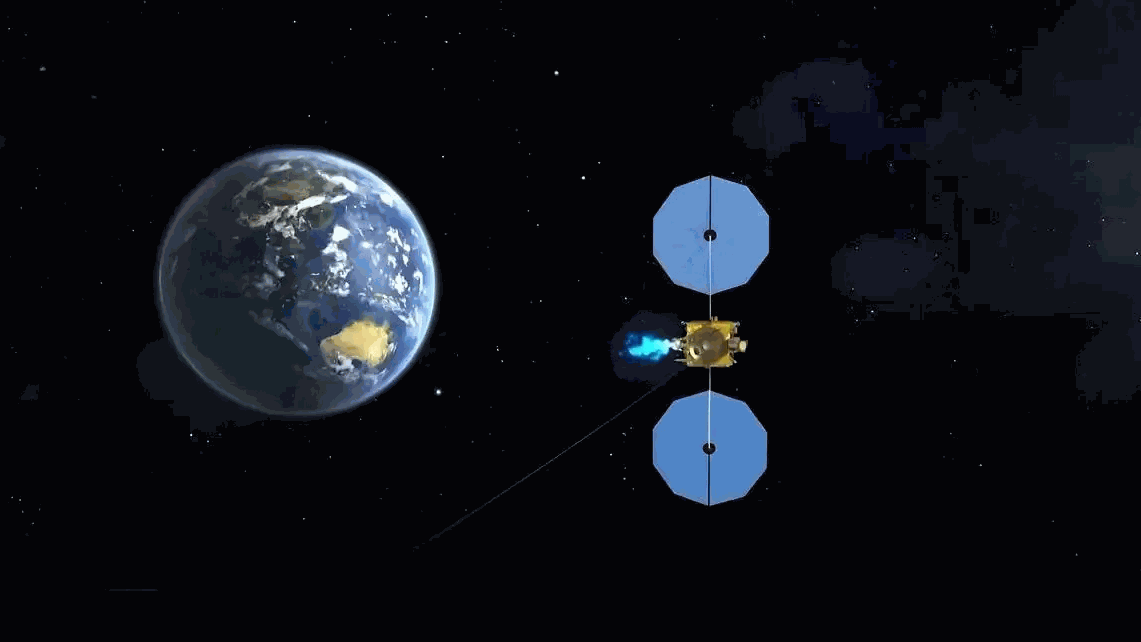
The Moon remains central to China’s long-term plans. Chang’e-7, scheduled for launch around 2026, will explore the lunar south pole and search for water ice, a key resource for future human activity.
At the same time, China is developing new spacecraft and launch vehicles, including the Mengzhou crewed spacecraft and the Long March 10 rocket, both designed to support a future crewed lunar landing. Official timelines place this goal in the early 2030s, following a step-by-step testing approach.
5. How China’s Space Strategy Differs
Unlike the commercial-led space race narratives often seen in the United States, China’s approach remains state-driven and incremental. Progress is measured less by headline moments and more by whether systems work reliably over time.
This strategy prioritizes continuity, redundancy, and integration across launch systems, space stations, lunar missions, and scientific probes. It also allows China to align space exploration closely with national planning cycles and long-term research goals.
Conclusion
China is not pursuing the global space race through spectacle or speed alone. Instead, it is building a layered space capability that spans Earth orbit, deep space, and future lunar activity. The result is a space program defined less by single breakthroughs and more by accumulation. As these systems mature, China is positioning itself as a permanent and influential player in the next phase of global space exploration.