
Key Points
- Beijing Daxing International Airport: Star-shaped layout with walking distances under 8 minutes. Central skylight and phoenix-inspired design combine technological aesthetics and efficiency for a futuristic feel.
- Shenzhen Bao’an International Airport: Honeycomb exterior, streamlined design, and unique lighting effects. Terminal 3 resembles a sea creature, blending technology with innovative art to embody Shenzhen’s spirit.
- Chengdu Tianfu International Airport: Inspired by the Sun Bird totem, highlighting ancient Shu culture. Terminals integrate Sichuan elements, offering a spacious and comfortable setting that reflects Chengdu’s relaxed vibe.
Today’s airports are no longer just transportation hubs—they have gradually evolved into grand stages that showcase a nation’s innovation and cultural depth. In China, a new wave of airports has become world-renowned landmarks thanks to their avant-garde designs, unique artistic appeal, and outstanding passenger experiences. They serve not only as points of departure and arrival but also as feasts for the eyes and the soul. Let us step into these architectural marvels together and explore the allure behind each of them.
Beijing Daxing International Airport: The Soaring Golden Phoenix
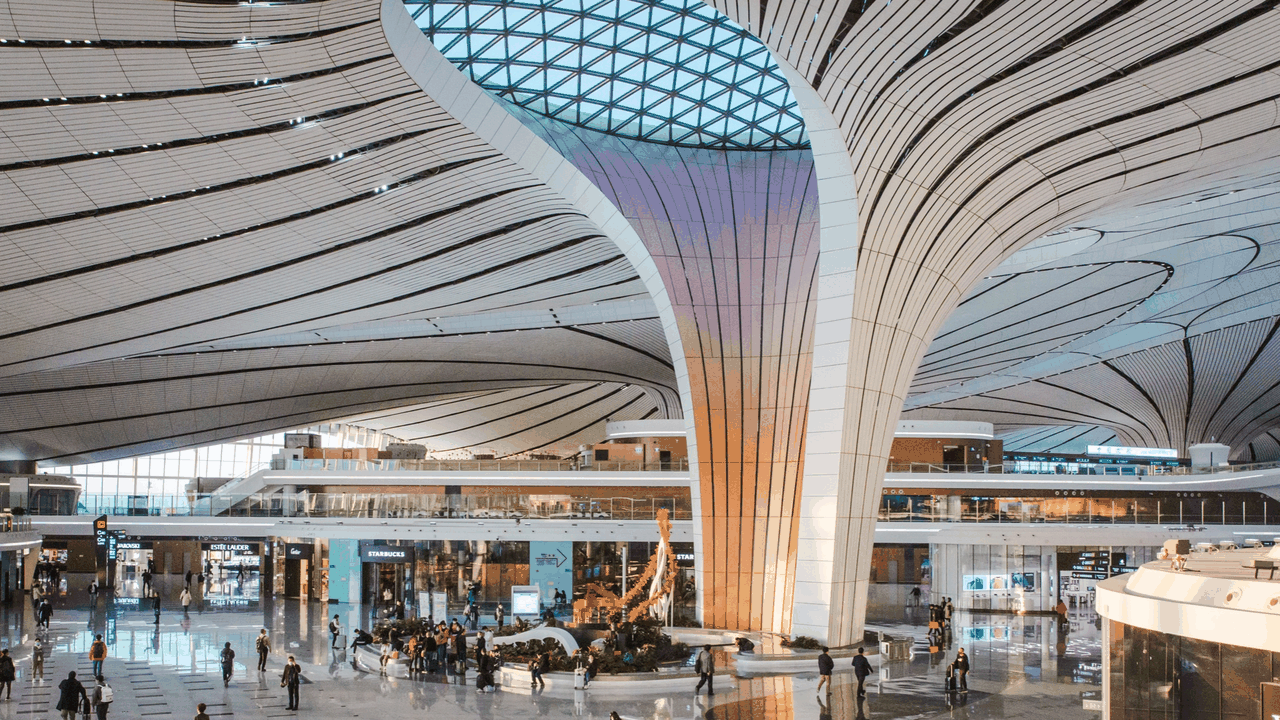
Recognized as the top of the “New Seven Wonders of the World,” Beijing Daxing International Airport has drawn global attention since its inception. Designed by the legendary team of Zaha Hadid Architects, its “soaring phoenix” shape is filled with a sense of futurism and vitality. Seen from above, the streamlined golden roof glistens in the sunlight, resembling a phoenix about to take flight—a symbol of good fortune and hope.
Stepping inside the terminal, you’ll be awed by its spacious and bright environment. The central skylight system, resembling a giant dandelion, draws natural light deep into the interior, creating an energy-efficient and eco-friendly space imbued with warmth and tranquility. The five radial concourses completely break away from conventional linear airport layouts, ensuring the walk from security to the farthest gate never exceeds eight minutes—a huge boost in efficiency and comfort for travelers. Here, technology and art blend seamlessly, turning every passage through the terminal into a stroll through a futuristic palace.
Shenzhen Bao’an International Airport: A Futuristic “Marine Creature”
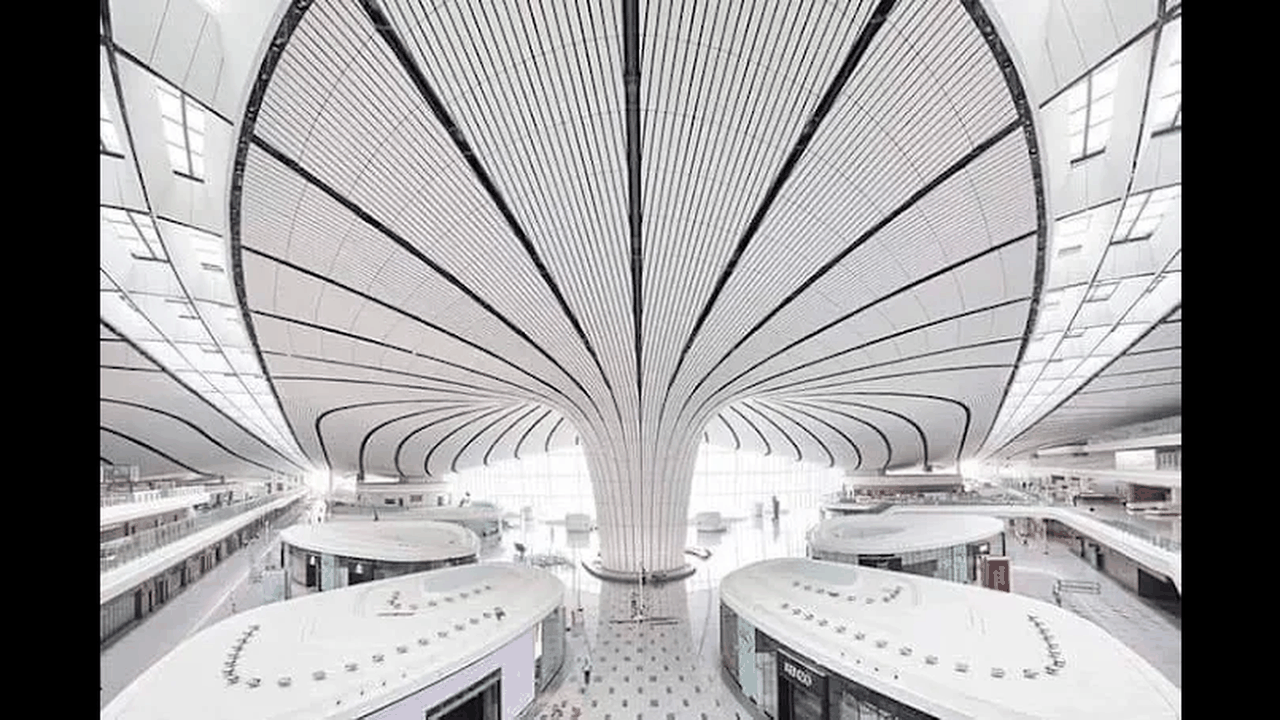
As China’s most vibrant city of innovation, Shenzhen’s airport perfectly mirrors its bold urban spirit. Terminal 3 of Shenzhen Bao’an International Airport, designed by the Italian architects Massimiliano and Doriana Fuksas, was inspired by marine life. From afar, the terminal resembles a giant manta ray gracefully resting on the ground, full of dynamism and imagination.
The most striking feature of the terminal is its honeycomb-patterned double-layer skin that envelops both the exterior and interior. Tens of thousands of hexagonal skylights are arranged like fish scales, filtering the southern sunlight and casting mottled, ever-changing shadows on the floor as the weather and time shift. Walking inside, the interplay of light and shadow feels like a magical journey into the depths of an underwater world. This unique design not only delivers an unparalleled visual impact but also achieves natural ventilation and illumination for the architecture. At Bao’an Airport, every upward glance is a romantic encounter with the art of light and shadow.
Chengdu Tianfu International Airport: Embracing the “Sun Bird” of Ancient Shu Civilization
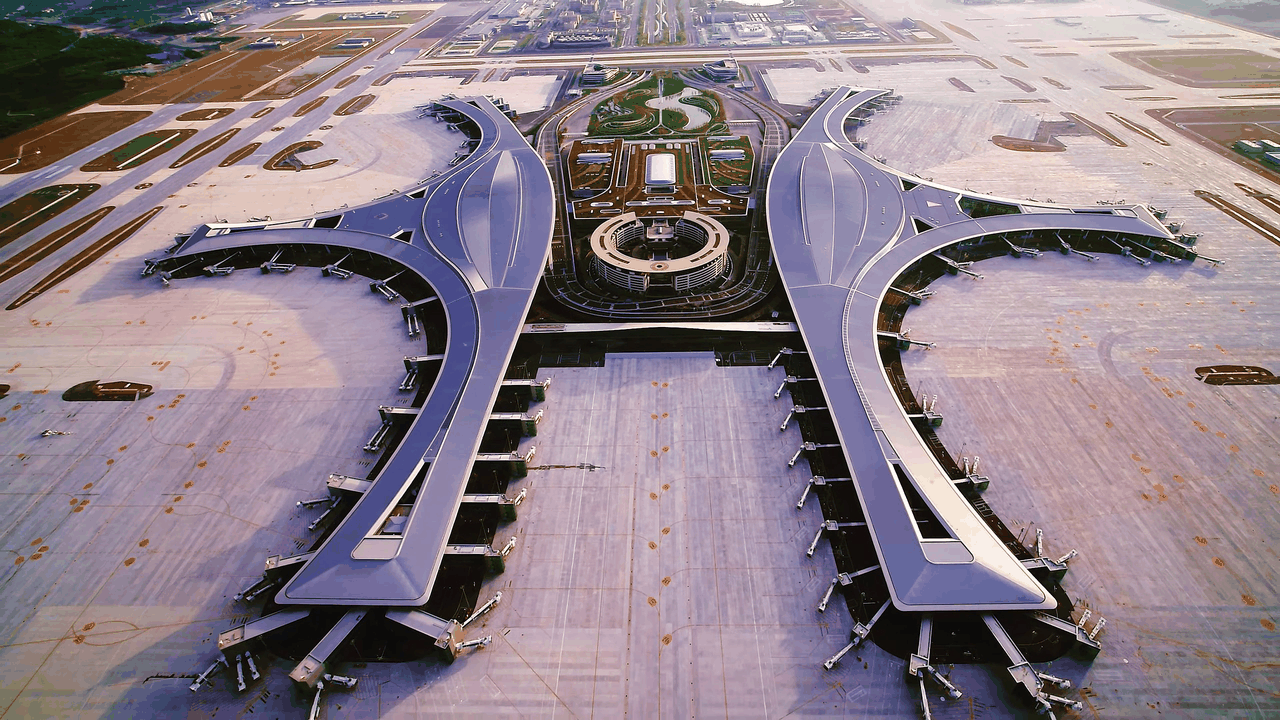
Chengdu, a city rich in historical heritage and the philosophy of leisurely living, sees its unique charm perfectly embodied in the newly built Tianfu International Airport. The design draws inspiration from the totem of the ancient Shu civilization—the “Sun Bird.” The two terminal buildings are symmetrically arranged, resembling two sacred birds carrying the sun in flight, showcasing not only the grandeur of modern architecture but also seamlessly integrating the essence of regional culture.
Every aspect of Tianfu Airport’s design reflects thoughtful, human-centered principles. The terminal’s interior is spacious and airy, with smooth, efficient pathways that allow travelers to move gracefully at every turn. Beyond its state-of-the-art facilities, the airport is adorned with artistic installations and courtyard landscapes themed around Sichuan elements such as bamboo groves and pandas, enabling passengers to experience the ease and comfort of the “Land of Abundance” even amid a busy journey. Here, flying becomes more than just traveling between destinations—it transforms into an immersive cultural experience, fusing the mystique of ancient Shu civilization with the convenience of modern aviation.
From the futurism of Beijing to the oceanic imagination of Shenzhen and the ancient mystical allure of Chengdu, China’s airports are blending architecture, art, and culture in unprecedented ways. They are not just efficient transportation hubs, but also serve as city icons and havens for the soul, inviting every traveler to embark on a journey in search of beauty.