
Key Points
- Global engineering record: At 16.18 kilometers, the Jintang Undersea Tunnel will become the longest undersea tunnel built for high-speed rail in the world.
- Extreme construction conditions: Excavation reaches up to 78 meters below the seabed, crossing numerous alternating soft and hard geological formations under high water pressure.
- Precision excavation technology: Two domestically manufactured tunnel boring machines operate with high-precision alignment systems to ensure safe underwater docking.
- Challenging geology: Nearly 70% of the route consists of mixed and uneven rock formations, with some layers exhibiting extremely high compressive strength.
- Regional connectivity: The tunnel will connect Zhoushan with China’s national high-speed rail network, improving mobility and regional integration.
- Engineering transformation: The project highlights China’s shift from rapid infrastructure expansion toward high-precision geological and marine engineering.
Project Overview
The Jintang Undersea Tunnel is a key segment of the 76.4-kilometer Ningbo–Zhoushan Railway, connecting Ningbo on the mainland with the Zhoushan island region. Designed for trains operating at speeds of up to 250 km/h, the railway will significantly enhance transportation efficiency between the island archipelago and the Yangtze River Delta once completed.
With a total tunnel length of 16.18 kilometers, the project will become the longest undersea tunnel built for high-speed rail anywhere in the world.
Extreme Marine Conditions
Constructing a high-speed railway tunnel beneath the sea presents exceptional engineering challenges.
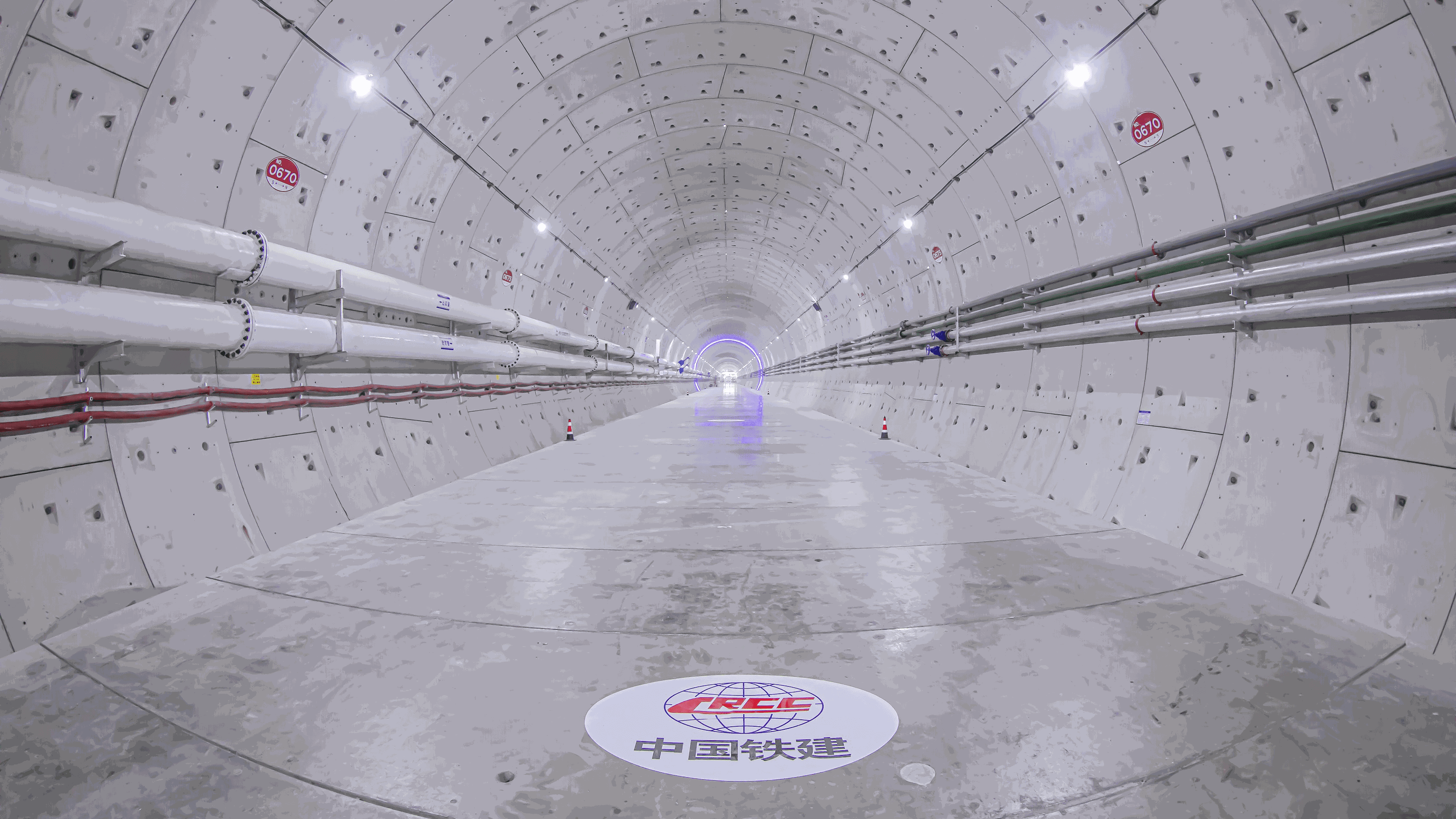
The tunnel reaches depths of up to 78 meters below the seabed, where water pressure can exceed 8.4 bar. Geological conditions along the alignment are highly complex, with numerous transitions between soft soil and hard rock layers.
Nearly 70 percent of the tunnel route passes through mixed or uneven geological formations. Some rock layers exhibit extremely high compressive strength, requiring specialized cutter tools and continuous monitoring during excavation.
These factors make the Jintang project one of the most technically demanding subsea tunneling efforts currently underway.
Advanced Shield Machine Technology
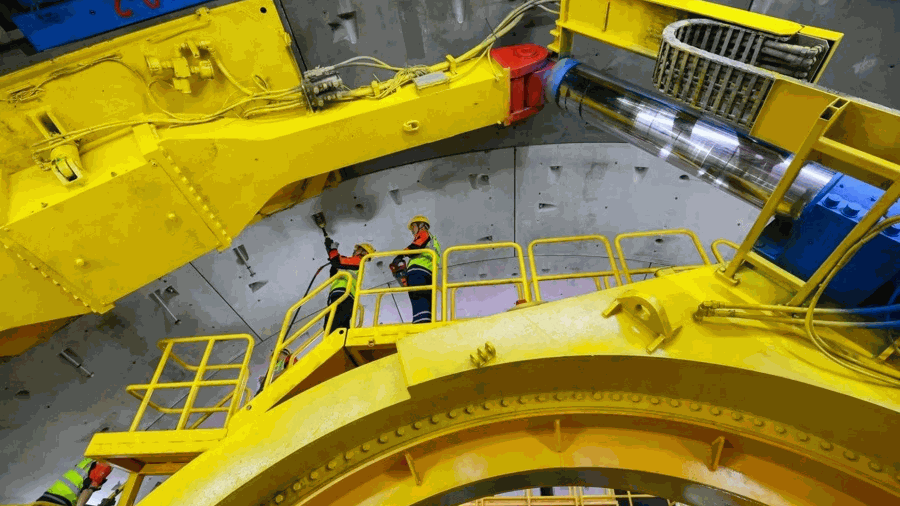
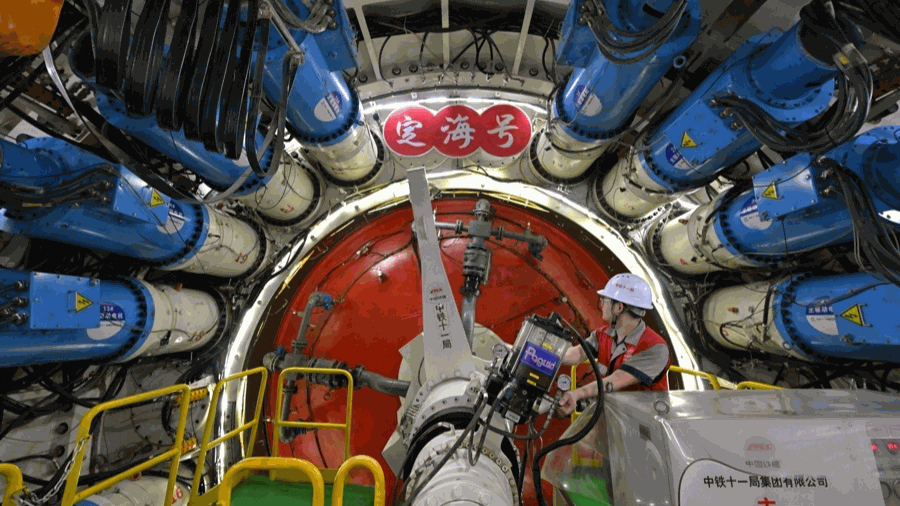
To address these challenges, engineers are deploying two massive tunnel boring machines (TBMs), named “Yongzhou” and “Dinghai.”
The two machines are excavating from opposite ends of the tunnel and will eventually meet beneath the seabed. Each TBM is equipped with heavy-duty cutterheads capable of handling both soft soil and extremely hard rock.
Advanced navigation systems, real-time monitoring technologies, and pre-grouting methods help stabilize surrounding geological layers and ensure construction safety.
These machines and their supporting systems are domestically designed and manufactured, reflecting China’s growing capabilities in large-scale infrastructure equipment.
Engineering Progress
As of late 2025:
-
On the Zhoushan side, the shield machine “Dinghai” has excavated more than 5,000 meters, completing roughly 80 percent of its 6,270-meter tunneling section.
-
The “Yongzhou” machine on the Ningbo side continues advancing through complex mixed geological formations as excavation progresses beneath the seabed.
-
Both tunnel boring machines are moving toward the planned underwater breakthrough point.
The subsea tunnel segment is scheduled to be completed in 2026, while the entire Ningbo–Zhoushan Railway is expected to begin operations in 2028.
Strategic and Global Significance
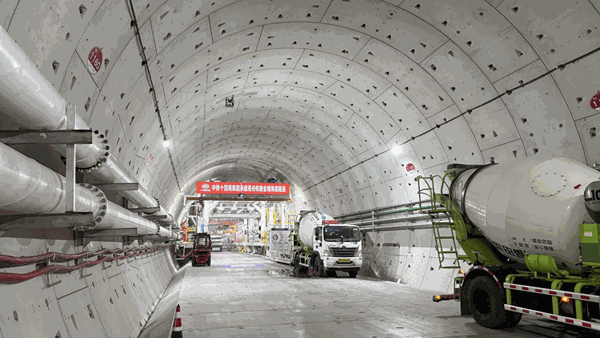
Once completed, the Jintang Undersea Tunnel will significantly improve connectivity between the Zhoushan archipelago and mainland China.
The railway will reduce travel times, support regional economic integration, and strengthen transportation links within the Yangtze River Delta—one of the country’s most dynamic economic regions.
Beyond its regional impact, the project also represents a major milestone in global subsea infrastructure engineering. By combining advanced tunneling technologies with complex geological management, the project demonstrates how modern engineering can overcome some of the most challenging marine construction environments on Earth.