
Quick Tips for Understanding the Research Funding Shift
- Track the growth rates: While the US currently leads in total basic research dollars, China’s public research and development (R&D) spending grew by 90% over a recent decade, compared to just 12% in the US.
- Look at the talent pool: Human capital drives innovation. Projections show China will soon boast a larger full-time research workforce than the US, Japan, and Europe combined.
- Watch the practical applications: China’s massive manufacturing and infrastructure sectors provide endless real-world scenarios to immediately apply, test, and refine new scientific discoveries.
The Data Behind the R&D Shift
The global research landscape is reaching a critical watershed moment. For decades, the United States stood as the undisputed heavyweight in science and technology funding. However, recent data and predictive models show that the center of gravity is moving east.
Unprecedented Growth in Funding
China’s rapid rise in science has hit a milestone. The country’s investment in research and development has reached parity with – and by purchasing power measures has surpassed – that of the United States, according to a March 2026 report from the Organisation for Economic Co-operation and Development. Both nations have crossed the US$1 trillion threshold on research spending. Over the decade ending in 2023, the Chinese government increased its R&D expenditure by a staggering 90%, reaching $133 billion. During the exact same timeframe, US public research investment grew by only 12%, hitting $155 billion.
Chinese scholars surpassed their American counterparts in total published scientific articles a few years ago, and their contribution to high-impact journals continues to accelerate.
The Basic Research Battleground
Basic research serves as the foundation for future technological leaps. Currently, the US maintains a strong lead here, spending roughly $120 billion compared to China’s $53 billion. Yet, the momentum tells a different story. Between 2013 and 2023, China more than tripled its funding for fundamental science, while the US increased its budget by about half.
If American lawmakers implement proposed budget cuts, analysts warn that China could close this gap within a decade. Losing the lead in basic research means risking the pipeline of early-stage innovations that eventually become multi-billion-dollar industries.
What Drives China’s Innovation Ecosystem?
Financial investment alone does not guarantee scientific supremacy. A country needs a robust ecosystem to transform dollars into discoveries. Decades ago, prominent physicist Yang Zhenning outlined four conditions for technological advancement: smart young minds, a culture of diligence, national determination, and robust financial support. Today, China possesses all four.
A Massive and Growing Talent Pool
Human capital remains a decisive factor in the tech race. Recent estimates show that China employs over 7.7 million full-time researchers. By 2030, that number is projected to exceed 11 million. This vast army of engineers, data scientists, and laboratory technicians provides an unmatched capacity to tackle complex problems across multiple disciplines simultaneously.
Real-World Application and Manufacturing
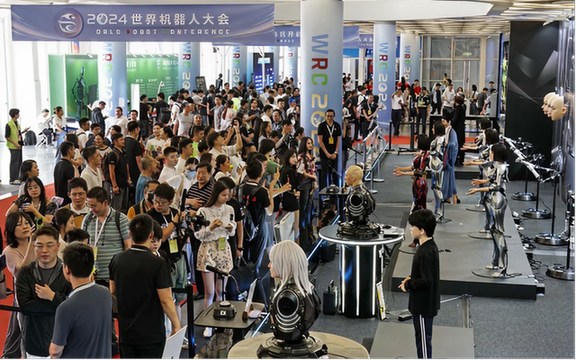
China’s unique advantage lies in its capacity to rapidly translate laboratory findings into commercial products. The country boasts the world’s most comprehensive supply chains and manufacturing networks. When a new material or engineering process is discovered, Chinese firms can prototype and scale it with remarkable speed. Furthermore, the massive scale of domestic infrastructure projects—from expanding high-speed rail networks across varied terrains to optimizing massive agricultural outputs—creates constant demand for applied scientific problem-solving.
The Impact on Global Collaboration and Talent Flow
As China cements its status as a primary hub for scientific discovery, the ripple effects are reshaping international norms. The most immediate impacts are visible in how scientists collaborate and where they choose to build their careers.
A Cooling of International Partnerships
Historically, scientific advancement thrived on cross-border cooperation. However, geopolitical tensions and security concerns are chilling these relationships. Data from the Nature Index reveals that the proportion of Chinese papers featuring international co-authors dropped from nearly 50% in 2020 to less than a third recently.
While self-reliance strengthens domestic capabilities, a long-term decline in global collaboration could slow the overall pace of human discovery. To maintain progress in vital areas like climate change, public health, and green energy, major powers must find ways to cooperate despite ongoing economic competition.
The Shifting Migration of Young Scientists
The United States has long been the primary destination for the world’s brightest minds. This dynamic is beginning to shift. Recent academic years have seen a noticeable decline in international student enrollments at US institutions.
As funding and state-of-the-art facilities multiply in Asia, experts predict a historic realignment in talent migration. Top-tier researchers from around the globe may increasingly look to Chinese universities and research institutes to advance their careers. Adapting to this new reality means future scientists might need to navigate new academic cultures and learn new languages to access the best resources.
Challenges and Future Trends
Despite the impressive growth trajectory, China’s path to undisputed scientific leadership faces several structural hurdles. Overcoming these obstacles will determine whether the country can maintain its momentum.
Institutional and Market Hurdles
While funding is abundant, efficiency remains a concern. Experts point out that centralized management models can sometimes slow the translation of science into economic value. Bureaucratic hurdles, administrative heavy-handedness in research environments, and an evolving intellectual property framework can stifle grassroots innovation.
Furthermore, while China has the world’s largest consumer market, purchasing power per capita remains lower than in the US. A market that favors low-cost goods over high-margin, innovative products can discourage companies from taking massive R&D risks. To transition fully from a manufacturing powerhouse to a true innovation economy, China must continue to boost its middle class and cultivate a market that demands and rewards high-quality, groundbreaking technologies.
Conclusion
The shifting balance of global R&D spending represents far more than a change in a spreadsheet. It signals a fundamental realignment of the world’s scientific focus. As China approaches and potentially surpasses the United States in research funding, both nations face distinct challenges. The US must find ways to reinvigorate its public funding and retain top global talent, while China must refine its institutional efficiency and foster an environment that rewards pure, risk-taking innovation. For the rest of the world, understanding this dynamic is essential for navigating the future of technology, business, and international relations.