
Key Points
- Historic High: China’s trade surplus exceeded $1 trillion from January to November 2025, driven by strong exports of high-value “New Three” products (EVs, Photovoltaics, lithium batteries).
- Structural Shift: The export structure is transforming, moving away from traditional goods toward advanced manufacturing, with deep supply-chain integration in the EU and Southeast Asia.
- E-commerce Growth: Cross-border e-commerce has become a major growth engine, helping to expand China’s global trade footprint and consumer reach.
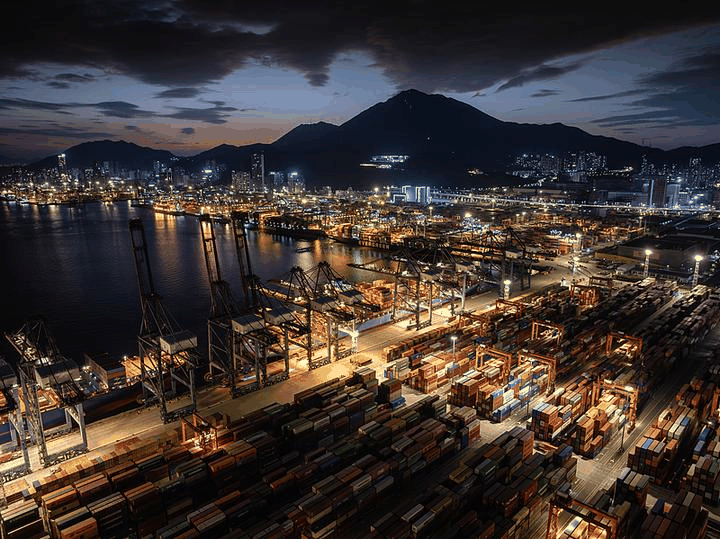
China’s trade surplus has surpassed a historic milestone, exceeding $1 trillion for the first time in the first 11 months of 2025. According to data recently released by the General Administration of Customs, the surplus reached $1.076 trillion. This figure, described by The Wall Street Journal as an unprecedented historical record, highlights a significant shift in China’s global trade landscape, characterized by reduced dependence on the U.S. market and deeper integration with the European Union, Southeast Asia, and Australia.
A Structural Transformation in Exports
The data reveals a structural transformation in China’s export economy, moving away from traditional labor-intensive goods toward high-end manufacturing. The “New Three”—electric vehicles, photovoltaics, and lithium batteries—have emerged as powerful drivers of growth. In the first half of the year alone, exports of these green products totaled 561.016 billion yuan, a 12.7% year-on-year increase. Exports of lithium batteries and wind turbines both saw growth rates exceeding 20%.
Deepening Trade Partnerships
European Union
China’s trade relationship with the European Union has demonstrated strong complementarity. In the first quarter, China’s imports of high-end equipment from the EU rose by 30.4%. Conversely, Chinese exports of industrial robots and high-end machine tools to the EU grew by 81.9% and 11.7%, respectively. This relationship extends to consumer goods, with China importing significant volumes of luggage and passenger vehicles from the EU while exporting electronics and apparel.
Southeast Asia
Southeast Asia has also become a critical partner through supply chain synergy. Increased investment by Chinese companies in nations like Vietnam and Thailand has boosted exports of intermediate goods such as phone components and integrated circuits. Meanwhile, in Australia, the entry of Chinese e-commerce platforms is helping to curb inflation, with analysts projecting that affordable Chinese goods could lower Australia’s overall inflation rate by 20 to 50 basis points.
Challenges and New Opportunities
In contrast, the export of traditional labor-intensive products faces challenges. In May of this year, exports of goods such as luggage, textile raw materials and products, footwear, toys, and furniture all recorded year-on-year declines. Nevertheless, China remains the only country in the world with all industrial categories defined in the United Nations industrial classification, encompassing 41 major industrial categories, 207 medium categories, and 666 sub-categories.
Notably, cross-border e-commerce has become a significant new force in China’s foreign trade. In 2024, the scale of China’s cross-border e-commerce imports and exports grew by 14% year-on-year, with exports increasing by 16.9%, far exceeding the growth rate of traditional goods trade.
Representative Sectors and Enterprises
Electric Vehicles (EVs)
As a representative of China’s new energy vehicle industry, BYD has expanded its presence to over 400 cities across more than 90 countries and regions worldwide. In 2024, its cumulative overseas sales reached 417,204 units, surging by an impressive 71.9% year-on-year, accounting for nearly one-tenth of its total sales. With the gradual ramp-up or new commissioning of production capacities in countries such as Thailand, Brazil, Hungary, and Uzbekistan, its overseas sales are poised to skyrocket further, positioning the company to vie for global dominance in the new energy vehicle market.
Photovoltaics (PV)
JA Solar has secured nearly 5 GW of module orders in overseas markets since 2025. Through its collaboration with international energy giant Masdar, the company signed a 2.6 GW module supply agreement, becoming the preferred supplier for the world’s largest solar-plus-storage project. It was also selected as the module supplier for Masdar’s Banka and Bilasuvar solar power projects in Azerbaijan, providing 1 GW of DeepBlue 4.0 Pro PV modules, thereby solidifying its foothold in the Middle Eastern market.
Lithium Batteries
In the first half of 2025, CATL’s global market share in power batteries reached 38.1%, maintaining its position as the world’s top player for the eighth consecutive year, with its share in the European market soaring to 43%. The company maintains long-term, stable partnerships with global mainstream automakers such as Tesla and Mercedes-Benz, and has secured approximately 70% of its core customers’ production capacity through joint ventures and factory collaborations. Breakthroughs in driving range, super-fast charging enabling a 10-minute recharge, and sodium-ion batteries capable of withstanding extreme cold as low as -40°C—almost every new product launched by CATL precisely addresses critical pain points in the industry, firmly securing its status as the global “hit-maker” in the power battery sector.
Cross-Border E-Commerce – Top-Selling Products

Platforms such as SHEIN, AliExpress, and Pinduoduo’s cross-border platform continue to achieve user growth and regional expansion. Chinese cross-border platforms like Temu are also accelerating their foray into the beauty market. As of the first half of 2025, Chinese e-commerce platforms collectively account for 15% of the global online beauty retail market. Yiwu, internationally renowned as the “supermarket warehouse” for over 200 countries, boasts an International Trade City so vast that one can easily get lost—its toy section alone features over 100,000 designs. One out of every three Christmas decorations worldwide originates from Yiwu, where cross-border e-commerce now constitutes over 40% of its trade. This enables buyers to select products directly online, with goods shipped globally straight from Yiwu’s warehouses.
About China General Administration of Customs
The General Administration of Customs is the headquarters of China Customs. It is a ministerial-level government agency directly under the State Council of the People’s Republic of China. It is responsible for supervising inbound and outbound activities, collecting customs duties and other taxes and fees, preventing smuggling, and compiling customs statistics.