
Key Points
A New Economic Frontier
- China’s low-altitude economy is projected to reach 1.5 trillion yuan by 2025
- Flying cars (eVTOLs) are positioned as the most iconic and ambitious segment
Rapid Industrial Momentum
- Shenzhen, Shanghai, and Hefei have emerged as key development hubs
- Dozens of companies are racing to commercialize eVTOL aircraft with strong policy backing
Core Bottlenecks
- Battery technology remains the most critical constraint
- Airworthiness certification and urban airspace integration slow commercialization
Capital Meets Reality
- Investment enthusiasm remains strong, but scrutiny is increasing
- The sector shows long-term promise but faces short-term uncertainty
China’s Flying Car Boom: Solid Innovation or Speculative Bubble?
A new economic frontier is opening up in the skies above China’s megacities. The so-called low-altitude economy, encompassing drone delivery and air taxi services, is projected to reach a scale of 1.5 trillion yuan by 2025. At the heart of this vision is the electric vertical take-off and landing (eVTOL) vehicle—often described as the flying car.
As investment pours in and prototypes take to the air, a critical question emerges: Is this emerging sector built on solid technological foundations, or is it running on speculative fuel?
Momentum Meets Reality on the Ground
Investigations into major industry hubs such as Shenzhen, Shanghai, and Hefei reveal a landscape of remarkable progress paired with formidable obstacles. Dozens of companies are developing eVTOL aircraft, drawing significant capital and government support. Yet, a mass-market flying car remains firmly on the horizon, not on the landing pad.
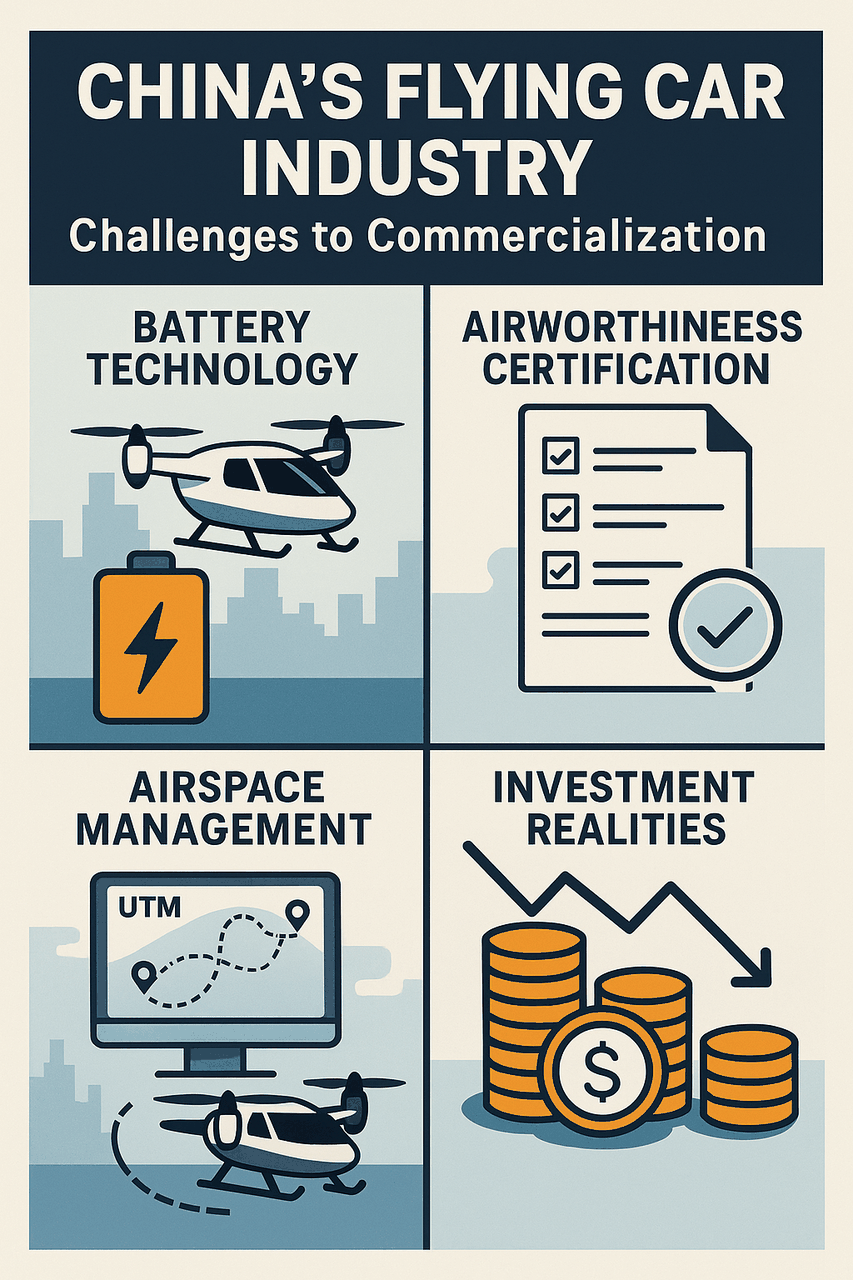
The journey toward routine air taxi services involves challenges that extend far beyond early-stage test flights.
The Supply Chain Puzzle
At the core of the eVTOL challenge lies the battery. Unlike electric cars, flying vehicles demand power systems that combine extremely high energy density, absolute safety, and rapid charging capability.
While China leads the world in battery manufacturing, aviation-grade requirements represent a steep technological climb.
“The battery is the single most critical component defining the performance of an eVTOL,” explains a senior engineer at a Shanghai-based developer. “What works for a car is not nearly sufficient for an aircraft that must be lightweight, powerful, and unfailingly reliable.”
This gap has pushed upstream suppliers to invest heavily in next-generation battery chemistry and advanced thermal management systems.
Navigating the Regulatory Maze
Beyond hardware challenges, commercialization depends on airworthiness certification. Before carrying passengers, every eVTOL must pass an exhaustive, multi-year approval process overseen by regulators such as the Civil Aviation Administration of China (CAAC).
Certification is only part of the equation. Integrating thousands of low-flying vehicles into dense urban airspace requires a new digital UTM (Unmanned Aircraft System Traffic Management) infrastructure. Building this system demands coordination across national and municipal authorities and remains a work in progress.
Investment vs. Reality
Capital enthusiasm for the sector is undeniable. Cities such as Hefei and Shenzhen are offering subsidies, land, and policy incentives to attract leading eVTOL firms.
However, investor sentiment is maturing.
“Early excitement was driven by vision,” says a partner at a Beijing-based venture capital firm. “Now we’re looking for certification progress, viable business models, and real infrastructure solutions.”
While long-term potential remains enormous, many analysts acknowledge that profitability could be years—or even a decade—away.
Innovation, Not Illusion
China’s flying car sector is neither a simple bubble nor an immediate revolution. Industrial ambition is real, technological progress is tangible, and policy support is strong. Yet the gap between today’s capabilities and the futuristic vision of skies filled with air taxis remains substantial.
Success will depend on patient capital, breakthrough engineering, and methodical regulatory development. For now, China’s flying car dream is still ascending—carefully navigating the turbulence between bold innovation and grounded reality.