
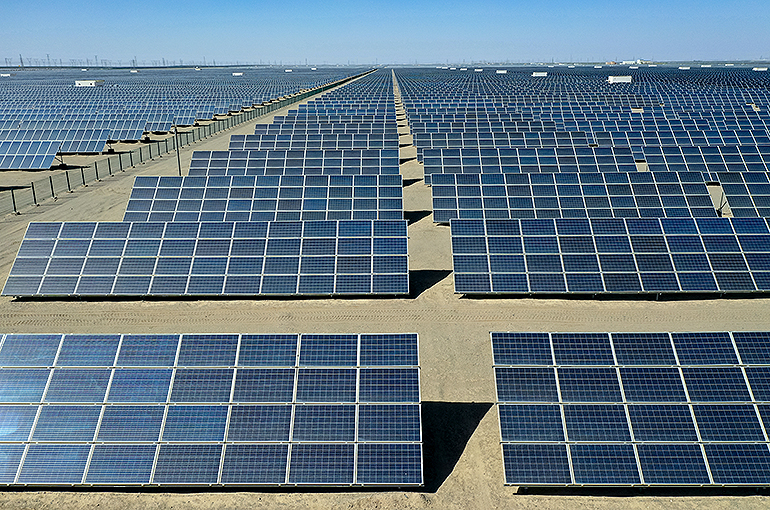
Chinese solar panels and EVs: “Overcapacity” or global climate solution?
Western politicians call it “overcapacity.” Global consumers call it affordable green technology. Climate scientists call it essential. The debate over Chinese manufacturing capacity in electric vehicles, lithium batteries, and solar panels reveals a fundamental tension: protectionist industrial policy versus accelerating the global energy transition—and who pays the price.
The “Overcapacity” Accusation
In 2024, US Treasury Secretary Yellen and Secretary of State Blinken repeatedly warned about Chinese “overcapacity” threatening global markets. The argument: Chinese government subsidies created massive production能力 that now floods world markets with cheap products, destroying competitors and distorting trade.
The evidence cited: China’s silicon material prices crashed from RMB 300,000 per ton (early 2023) to under RMB 70,000—an 80% plunge. Solar panel prices fell approximately 50% from 2022 to 2023. EV battery raw material lithium carbonate dropped 80% from its 2022 peak.
Western response was swift. The US imposed a 100% tariff on Chinese EVs (total 102.5% including existing levies). The EU announced additional tariffs in June 2024. Both justified these measures citing unfair subsidies creating overcapacity.
The Consumer Reality: Falling Prices, Rising Access
Here’s what “overcapacity” actually means for ordinary people:
Solar Power Becomes Affordable
A decade ago, solar panels were luxury items. Today, thanks primarily to Chinese manufacturing scale, they’re accessible to middle-class homeowners worldwide. The price collapse—from RMB 1.8-1.9 per watt (early 2023) to RMB 1.2-1.3 per watt—represents a 30% drop in months.
For a typical 5kW home solar installation, this translates to savings of thousands of dollars. What was a 15-year payback period now approaches 7-8 years. The difference: whether solar makes economic sense for average families or remains an expensive virtue signal.
Bloomberg noted: “The global energy transition has hope largely because China provides cheap, clean products.”
Electric Vehicles for the Masses
Chinese EV manufacturers aren’t dumping products below cost—they’re selling them at prices higher abroad than domestically. Yet they still undercut Western competitors significantly. A BYD Seal costs roughly twice in Europe what it costs in China, yet remains cheaper than comparable European EVs.
This isn’t dumping—it’s efficiency. Chinese EV producers benefit from:
- Complete supply chains (battery materials → cells → packs → vehicles) within “4-hour production circles”
- Massive domestic market enabling economies of scale
- Rapid technology iteration driven by intense competition
- Lower labor costs but increasingly高端 automation
The result: EVs transitioning from premium products to mass market accessibility. For climate goals requiring billions of people to switch from combustion engines, this matters enormously.
The Subsidy Hypocrisy
Western critics fixate on Chinese subsidies. But compare:
China:
- EV subsidies: Under $2,000 per vehicle
- Program ended in 2023
United States:
- EV tax credits: $2,500-$7,500 per vehicle (ongoing)
- Infrastructure and Jobs Act: $7.5 billion for charging infrastructure
- Inflation Reduction Act: $369 billion for clean energy industries
Germany:
- EV subsidies: ~$3,200 per vehicle (reduced but continuing)
Japan:
- EV subsidies: $2,800+ per vehicle since 2008
China’s subsidies were smaller and shorter-lived than Western counterparts. The difference: Chinese subsidies catalyzed a competitive domestic industry that no longer needs them. Western subsidies often prop up companies that struggle to compete even with support.
The Climate Imperative
The International Energy Agency (IEA) calculates that achieving Paris Agreement goals requires:
- Solar capacity by 2030: 5,400 GW (4x current global total, 9x China’s current capacity)
- EV sales by 2030: 45 million annually (3x 2023 levels)
Even if China maintains 20% annual EV production growth, it would reach only 34.35 million vehicles by 2030—below global需求. Solar installation rates need to quadruple globally.
From this perspective, the question isn’t “Does China have overcapacity?” It’s “Does the world have enough capacity to meet climate targets?”
The answer: Not remotely.
Every solar panel that costs 30% less accelerates adoption. Every EV that undercuts combustion vehicles by $5,000 converts another buyer. When Bloomberg analysts project 2024 renewable energy capacity additions of 510 GW (with solar accounting for 75%), they’re describing a world desperate for more production, not less.
Who Benefits, Who Loses?
Winners:
Global Consumers: Lower electricity bills from cheaper solar, affordable EV options, reduced inflation from cheap renewable energy
Developing Nations: Previously unable to afford solar installations or EVs now have realistic pathways to leapfrog fossil fuel dependence
Climate Goals: Faster transition at lower cost increases probability of meeting Paris targets
Innovation: Chinese competition forces Western companies to innovate rather than coast on established positions
Losers:
Western Manufacturers: Companies unable to match Chinese efficiency face extinction or require massive subsidies
Fossil Fuel Industries: Cheaper renewables accelerate the inevitable decline
Workers in Uncompetitive Industries: Job losses in高成本 Western manufacturing (though new jobs created in installation, maintenance, grid integration)
The question becomes: Should we slow the energy transition to protect specific industries, or accelerate it and manage the industrial transition?
The Protectionist Paradox
US and EU tariffs present a curious logic:
- We must combat climate change urgently
- Chinese products dramatically lower the cost of climate action
- Therefore, we’ll make those products prohibitively expensive
The result: European and American consumers pay more for solar panels and EVs. Adoption slows. Climate goals recede further. Meanwhile, the rest of the world—Africa, Latin America, Southeast Asia—eagerly buys affordable Chinese green technology.
Swiss newspaper Neue Zürcher Zeitung noted the contradiction: “Complaints about Chinese overcapacity are hypocritical and short-sighted. Rather than complain, compete fairly, promote equal market access, and benefit from quality, affordable products.”
The Real “Overcapacity” Issue
China does face genuine structural overcapacity in some traditional industries. Glass and cement capacity utilization rates hover around 30% due to the real estate market collapse. Some solar and battery segments show temporary supply-demand imbalances.
But this reflects:
Cyclical Factors: Post-COVID demand normalization, inventory digestion, technology transitions (P-type to N-type solar cells)
Market Mechanisms Working: Prices fall, inefficient producers exit, survivors become leaner
Structural Transformation: China moving from construction-driven growth to technology-driven exports
The solution isn’t tariff walls—it’s allowing market forces to clear excess capacity while maintaining the green technology push that serves global needs.
Technology, Not Subsidies
Chinese green industry competitiveness stems from:
Early Strategic Vision: Identifying EVs and solar as strategic industries in the 2000s, not 2020s
Complete Supply Chains: Controlling raw materials → processing → components → final products
Massive Domestic Market: 1.4 billion people providing scale economies and rapid iteration cycles
Intense Competition: Hundreds of EV makers and solar companies driving innovation
Technology Breakthroughs: Solving solar’s “high cost and grid connection” problems through R&D; advancing EV battery density, safety, and charging speed
Consider: China’s长三角 (Yangtze River Delta) EV manufacturers source 80%+ of components within a 4-hour drive. Try replicating that elsewhere.
Living Standards: The Bottom Line
For ordinary people worldwide, Chinese green manufacturing capacity translates to:
Lower Energy Costs: Solar installations paying for themselves faster, reducing electricity bills
Transportation Affordability: EVs approaching price parity with combustion vehicles years sooner
Reduced Inflation: Cheap solar power flowing into manufacturing costs, moderating price increases
Climate Action Accessibility: Green choices becoming economically rational, not just morally righteous
When a middle-class家庭 in Kenya, Mexico, or Indonesia can afford solar panels or an EV—options previously limited to wealthy nations—that’s not market distortion. That’s democratization of technology.
The Path Forward
The “overcapacity” debate ultimately asks: Do we prioritize specific industries or general welfare? Short-term jobs or long-term climate? National champions or global consumers?
History offers guidance. When Japanese cars entered Western markets in the 1970s-80s, Detroit cried unfair competition. Tariffs and quotas followed. But consumers chose quality and affordability. Eventually, Western automakers had to up their game or perish. The result: better cars for everyone.
Today’s EV and solar “threat” mirrors that pattern. Protect legacy industries, and you preserve jobs temporarily while consumers pay more and climate goals slip. Embrace competition, and you force innovation while democratizing green technology.
The choice seems clear—if we’re serious about climate change.
Conclusion
Chinese “overcapacity” in green technology represents a paradox: what Western politicians call a threat, global consumers call a gift, and climate scientists call essential.
Yes, Chinese production has created temporary price压力 and competitive challenges. Yes, some Western companies struggle to adapt. But the alternative—maintaining artificially high prices through protectionism—benefits a few industries at everyone else’s expense.
Solar panels costing 80% less than three years ago aren’t market distortion—they’re exactly how technological progress should work. EVs approaching combustion vehicle prices aren’t unfair—they’re necessary for mass adoption.
As the world faces existential climate challenges requiring massive, rapid technological deployment, the question isn’t whether China has overcapacity. It’s whether we have enough capacity—globally—to meet the moment.
Current evidence suggests: not nearly enough.
For more on global energy transition trends, visit IEA.org or Bloomberg New Energy Finance