
Key Points
- China’s prehistoric civilization emerged from multiple regional traditions rather than a single origin.
- Major river basins such as the Yellow River, Yangtze River, Liao River, and Chengdu Plain nurtured distinct cultures.
- Long before written history, early societies had already developed agriculture, ritual systems, social hierarchy, and advanced craftsmanship.
The Yellow River Basin: From Painted Pottery to Black Ceramics
The Yellow River basin is often described as the heartland of early Chinese civilization. Archaeological evidence shows a long and continuous process of cultural development stretching back thousands of years.
The Peiligang Culture (around 9,000 to 7,000 years ago) marks an early stage of settled life in northern China. Excavations reveal millet farming, animal domestication, and organized village living. One of its most remarkable discoveries is the Jiahu bone flute, capable of producing a structured range of sounds. This suggests that music and ritual expression already played a role in prehistoric society.
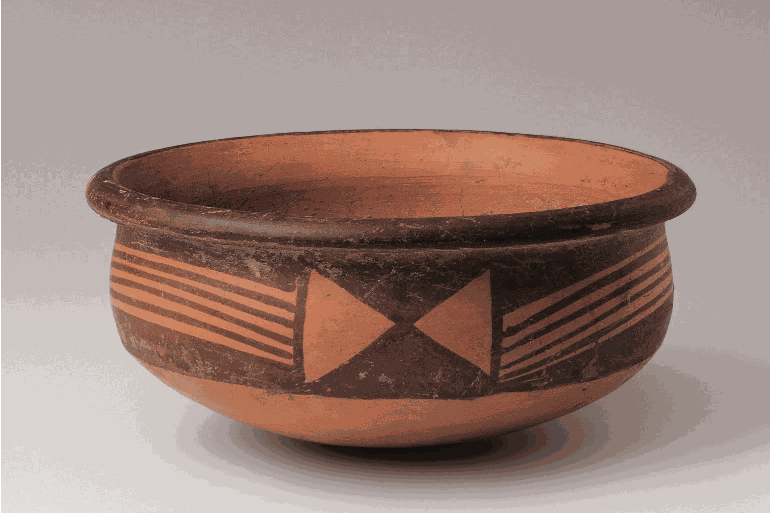
The Yangshao Culture (around 7,000 to 5,000 years ago) represents a major leap forward. Best known for its vibrant painted pottery, including the famous human-face-and-fish motifs, Yangshao Culture reflects early symbolic thinking and shared cultural identity. Settlements were carefully planned, indicating increasing social organization.
Later, the Longshan Culture (around 4,500 to 4,000 years ago) brought dramatic changes. Its signature artifact is the extremely thin eggshell black pottery, a technical achievement unmatched by earlier cultures. At the same time, fortified settlements and burial differences point to growing social stratification, suggesting that early class structures were beginning to emerge.
The Yangtze River Basin: Rice Farming and the World of Jade
While millet farming defined the north, prehistoric societies in the south followed a different path shaped by wetlands and rice cultivation.
The Hemudu Culture (around 7,000 years ago) is one of the earliest known rice-farming societies. Archaeologists have uncovered large quantities of cultivated rice along with stilted wooden houses, designed to cope with the region’s humid environment. These structures demonstrate early woodworking and joinery techniques that would later influence traditional Chinese architecture.
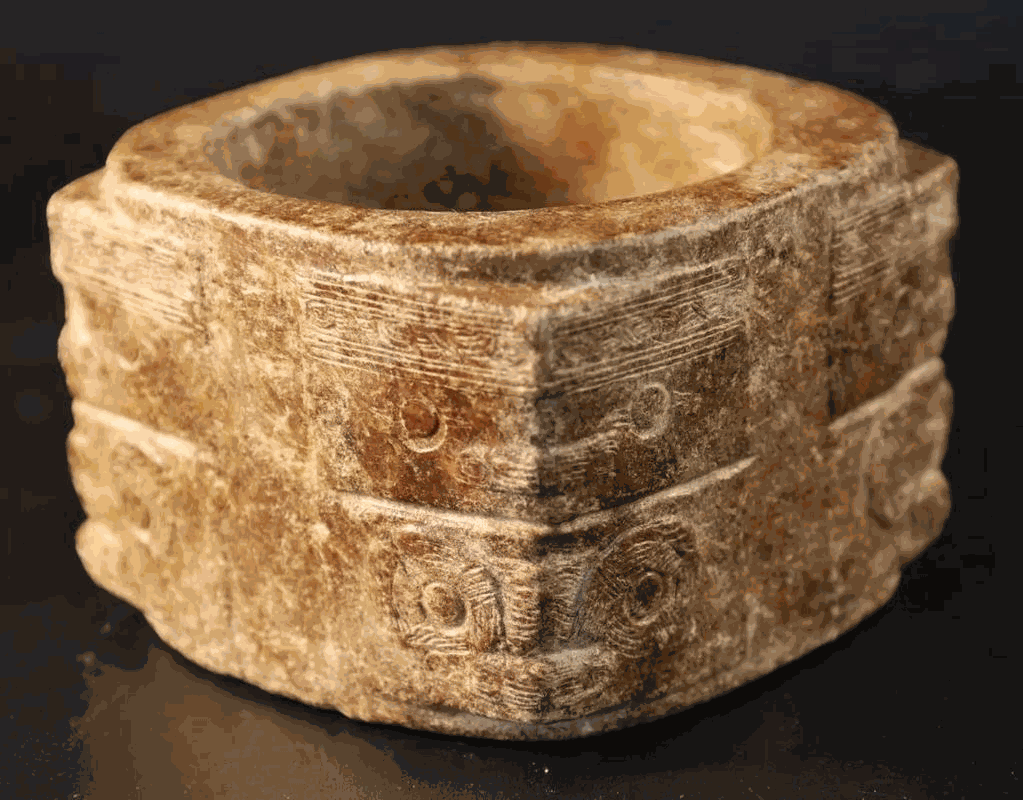
The Liangzhu Culture (around 5,300 to 4,300 years ago) represents a high point of prehistoric development in the Yangtze Delta. Large-scale city ruins, complex water management systems, and standardized ritual objects reveal a society of remarkable sophistication. Finely crafted jade cong and bi discs, often decorated with mysterious deity-like symbols, indicate a highly organized belief system. Today, Liangzhu Culture is widely regarded as evidence of an early state-level civilization.
In the middle reaches of the Yangtze River, the Shijiahe Culture functioned as an important jade-production center. Its jade artifacts, including phoenixes and human heads, display both technical mastery and strong regional character.
The Liao River Basin: Northern Ritual Traditions and Early Dragon Imagery
In northeast China, the Hongshan Culture (around 6,500 to 5,000 years ago) developed a unique ritual landscape.
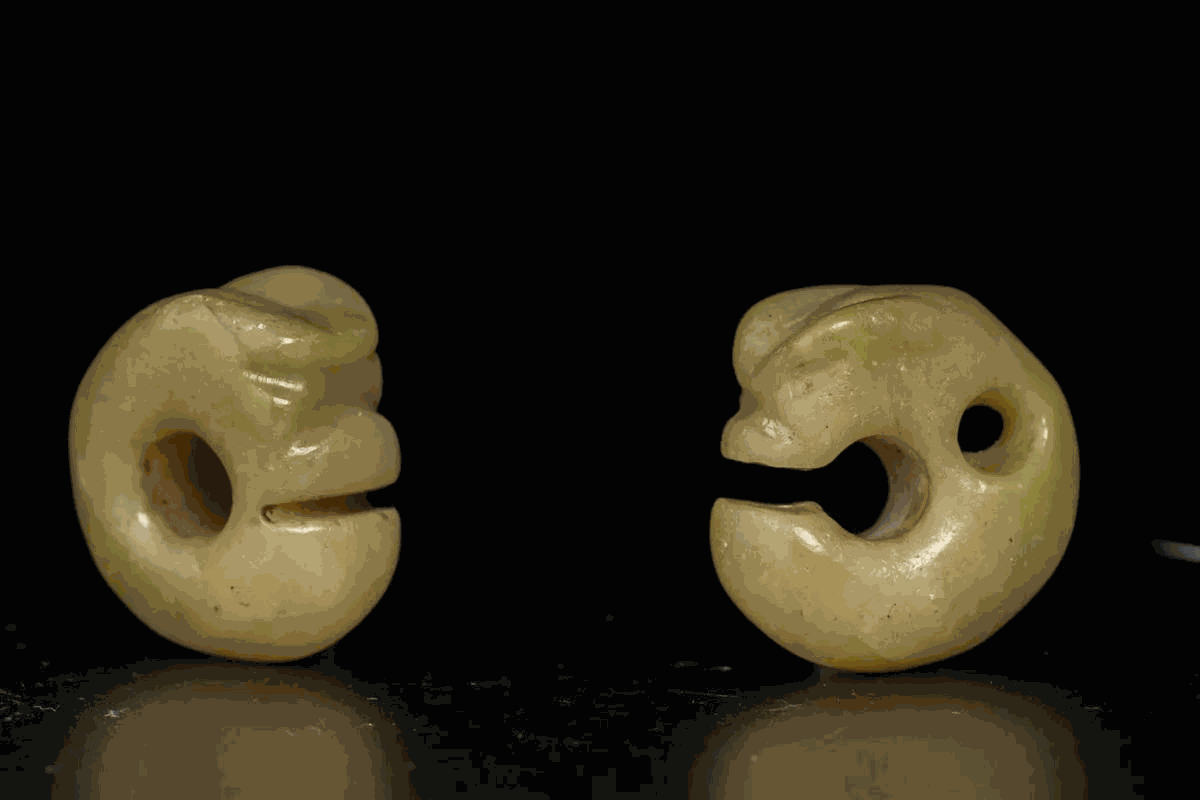
Archaeologists have uncovered ceremonial altars, stone burial mounds, and the so-called Goddess Temple, one of the earliest known ritual structures in China. Among the most famous finds is the jade pig-dragon, often interpreted as an early form of dragon imagery. These discoveries suggest that complex religious ideas and symbolic systems were already taking shape far beyond the Yellow River basin.
The Ancient Shu Region: A Distinct Path to Civilization
In southwest China, the Chengdu Plain followed a notably different prehistoric trajectory.
The Baodun Culture represents early urban experimentation in the region and is widely considered a direct precursor to the later Sanxingdui civilization. Although Sanxingdui emerged during the Bronze Age, its belief system and artistic style clearly draw on much older traditions.
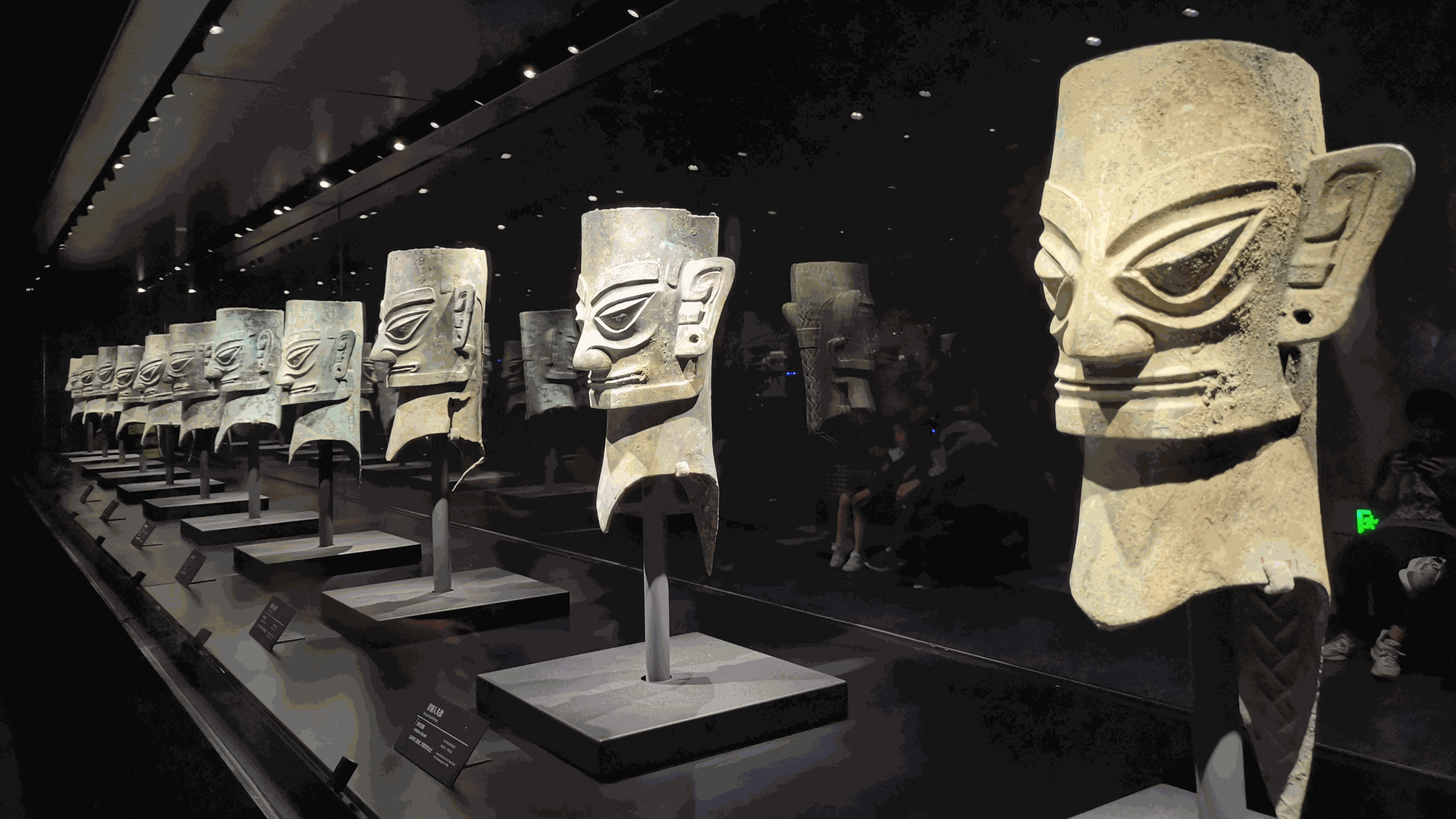
Spectacular discoveries at Sanxingdui, including towering bronze figures, sacred trees, and striking gold masks, reveal a worldview unlike that of the Central Plains. Rather than conforming to a single cultural model, Sanxingdui highlights the diversity and independence of early Chinese civilizations.
A Civilization Shaped by Many Origins
Taken together, these cultures show that China’s prehistoric civilization developed through multiple regional pathways rather than a single linear process. Different environments encouraged different solutions, leading to a remarkable diversity of social structures, technologies, and belief systems.
By the time written records appeared, many of the essential elements of Chinese civilization were already firmly in place. Agriculture, ritual authority, social hierarchy, and artistic expression all had deep prehistoric roots. The story of early China, therefore, is not one of a single origin, but of many ancient worlds gradually shaping a shared cultural foundation.