
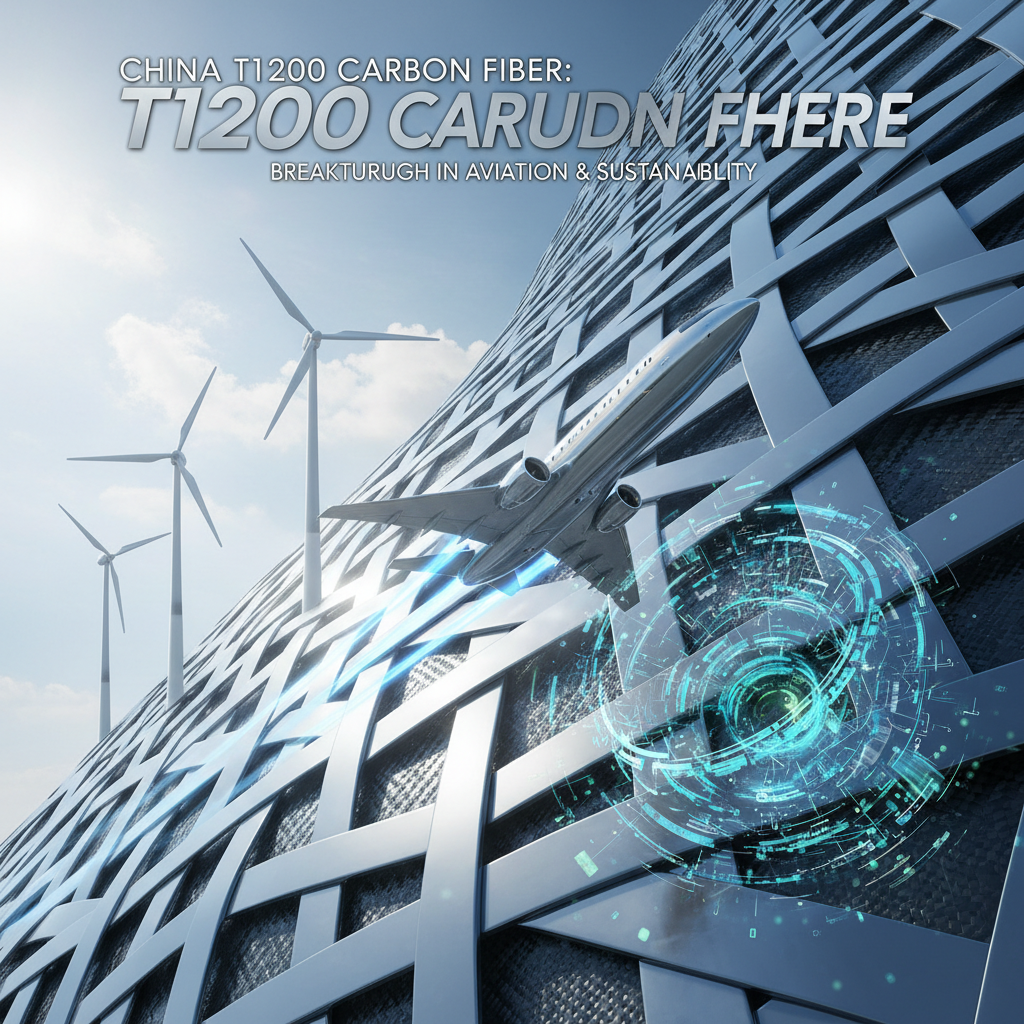
Materials define eras. Bronze, iron, and steel all changed human history by making new technologies possible. Now, advanced carbon fiber is driving the next massive industrial shift.
Recently, China announced a major breakthrough in material science: the mass production of T1200 carbon fiber. This ultra-high-strength material was previously difficult and incredibly expensive to produce at scale. Now that Chinese manufacturers have cracked the code for mass production, the ripple effects will be felt across the globe.
So, why does this specific material matter so much? From making airplanes lighter to building massive wind turbines, T1200 carbon fiber is set to change the core of how we build the future. Here is a look at the significance of T1200 carbon fiber and how it will transform global supply chains.
What Makes T1200 Carbon Fiber So Special?
Carbon fiber gets graded by its tensile strength and modulus (stiffness). Most industries currently rely on T300 to T800 grades for standard manufacturing. These materials offer a great balance of being lightweight and strong.
T1200 carbon fiber takes this to an entirely different level. It offers exceptional tensile strength, making it one of the strongest carbon fibers available. Yet, it weighs a fraction of traditional metals like steel or aluminum.
Until recently, only a few companies—primarily in Japan and the United States—held the technology to produce aerospace-grade carbon fiber. Furthermore, producing T1200 at a commercial scale proved incredibly challenging. China’s ability to mass-produce this advanced material means it will soon become more accessible and affordable for heavy industries worldwide.
Elevating the Aviation Industry
Aviation faces a constant battle against weight. Every extra pound on an aircraft requires more fuel to lift, which increases operating costs and carbon emissions.
Lighter, Stronger Commercial Jets
Commercial aviation stands to gain massively from T1200 carbon fiber. By replacing heavier aluminum and lower-grade composite parts with T1200, manufacturers can drastically reduce the weight of an aircraft without sacrificing structural integrity. Lighter planes consume less jet fuel. This extends flight ranges and lowers ticket costs over time.
Advancing Next-Generation Aircraft
Beyond traditional planes, this breakthrough will accelerate the development of electric vertical takeoff and landing (eVTOL) vehicles and drones. Battery weight is the biggest hurdle for electric aviation. Using ultra-lightweight T1200 carbon fiber for the chassis and wings helps offset the heavy batteries, making electric flight far more viable.
Powering the Renewable Energy Revolution
The push for green energy relies heavily on material science. Renewable energy infrastructure demands materials that can withstand extreme weather while operating at high efficiencies.
Pushing the Limits of Wind Energy
Wind turbines are getting larger because bigger blades capture more wind energy. However, traditional fiberglass or lower-grade carbon fiber blades become too heavy and bend under their own weight when they get too long. T1200 carbon fiber provides the perfect solution. Its high stiffness-to-weight ratio allows engineers to design massive, ultra-long turbine blades that remain rigid and efficient, significantly boosting the power output of offshore wind farms.
Revolutionizing Hydrogen Storage
Hydrogen energy is a highly promising clean fuel, but it presents a major storage challenge. Hydrogen must be compressed at extremely high pressures. Standard metal tanks are too heavy for vehicles, and weaker composite tanks risk rupturing. T1200 carbon fiber can be woven into lightweight, ultra-strong pressure vessels. This makes hydrogen fuel cell vehicles safer and more practical for everyday use.
Shaking Up Global Supply Chains
For decades, the global supply of premium carbon fiber has been tightly controlled by a handful of international corporations. China’s breakthrough fundamentally disrupts this dynamic.
Breaking Technological Monopolies
By achieving mass production of T1200, China reduces its reliance on foreign imports for critical aerospace and military applications. This shifts the global balance of technological leadership. As Chinese manufacturers ramp up production, they will likely start exporting this material, ending the long-standing monopoly held by Japanese and American suppliers.
Driving Down Costs Across Industries
Increased competition and scaled production naturally lead to lower prices. As the cost of T1200 carbon fiber drops, industries that previously found it too expensive will start adopting it. We can expect to see this advanced material trickle down from aerospace and elite wind turbines into consumer electronics, high-performance cars, and sporting goods.
The Road Ahead for Advanced Materials
China’s ability to mass-produce T1200 carbon fiber is not just a national victory; it is a catalyst for global industrial innovation. By providing a lighter, stronger building block for aerospace and renewable energy, this breakthrough helps pave the way for a more efficient and sustainable future.
As production scales up over the next few years, keep an eye on how aerospace manufacturers and energy companies adapt their designs. If you work in engineering, manufacturing, or supply chain management, now is the time to evaluate how ultra-high-strength carbon composites can elevate your products.