
In global economic discussions, few topics spark as much debate as trade imbalances. Specifically, China’s trade surplus—the difference between the value of its exports and imports—often finds itself in the crosshairs of politicians and pundits. The prevailing narrative suggests this surplus is a destabilizing force, a sign of unfair play, or a drain on other nations’ economies.
But does this narrative hold up under scrutiny? While it’s easy to point fingers at large numbers, a closer look reveals that China’s role in global trade is far more nuanced. Far from being a simple case of one winner and many losers, China’s export strength has underpinned global supply chain efficiency, kept inflation in check, and provided affordable goods to consumers worldwide.
Here is why we need to rethink the criticism surrounding China’s trade surplus.
The Myth of the Zero-Sum Game
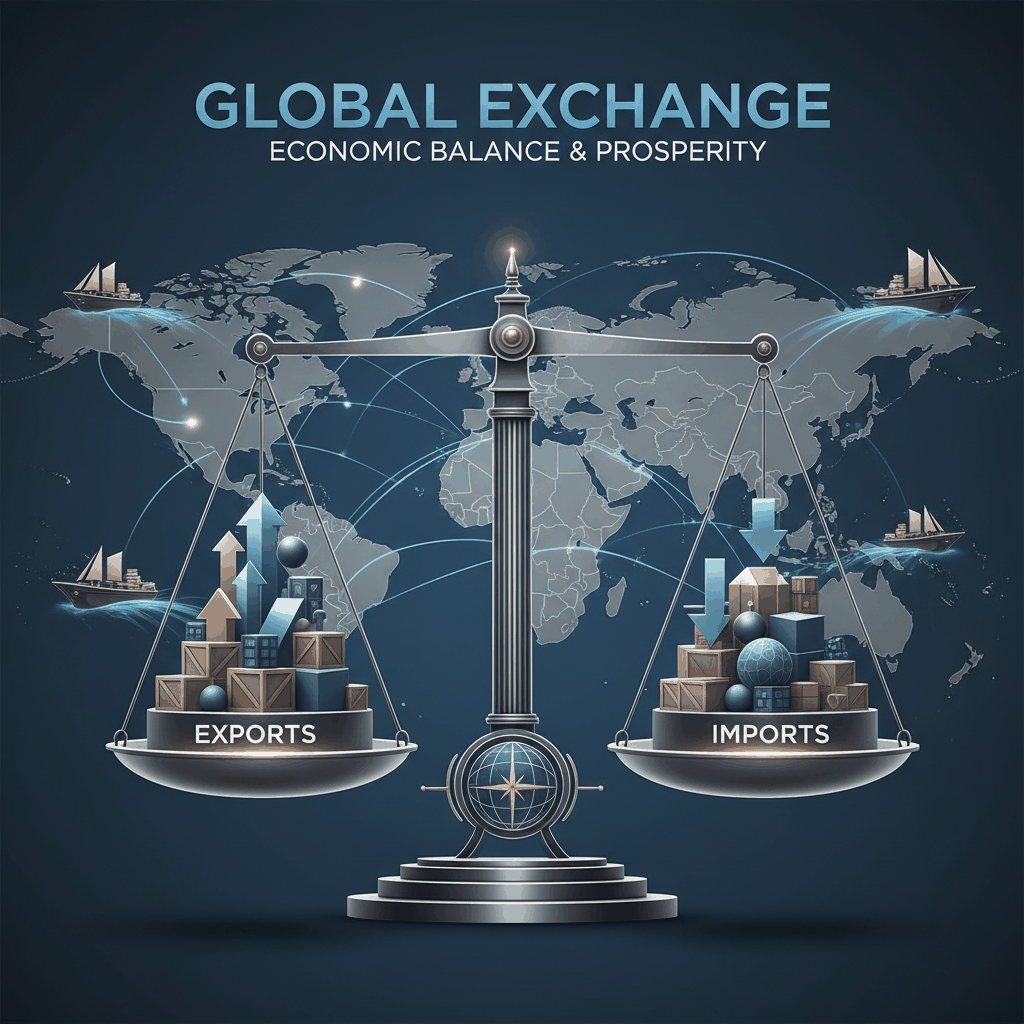
Critics often view trade as a zero-sum game: if China sells more, someone else must be losing. This perspective ignores the fundamental principles of comparative advantage. Economies thrive when they focus on what they do best.
China’s surplus isn’t necessarily the result of market manipulation, but rather a reflection of its deep industrial ecosystem. Over decades, the country has built an unparalleled infrastructure for manufacturing. This includes not just factories, but efficient ports, roads, and a skilled labor force. When the world buys from China, it is tapping into this efficiency.
When a company in the US or Germany imports components from China, it isn’t “losing” money. It is often purchasing intermediate goods that allow it to create final products more competitively. This integration boosts productivity in importing nations, allowing their businesses to focus on higher-value activities like design, R&D, and services.
Inflation’s Silent Brake
For the average consumer in the West, the benefits of China’s trade surplus are felt daily, even if they go unnoticed. By serving as the “world’s factory,” China has supplied a steady stream of affordable consumer goods—from electronics and clothing to household appliances.
This massive supply capacity acts as a powerful deflationary force. In an era where inflation has threatened to erode purchasing power globally, the availability of cost-effective goods from China helps keep prices grounded.
If nations were to abruptly shut off these imports in an attempt to balance trade sheets, the immediate result would likely be a sharp spike in the cost of living. Working-class families in importing countries benefit most from the affordability that China’s efficient production provides.
An Anchor for Global Supply Chains
The resilience of global supply chains relies on reliable hubs. China’s trade surplus is, in many ways, a metric of its reliability. During various global disruptions, China’s manufacturing capacity has often stepped in to fill gaps that other nations could not.
Consider the green energy transition. The world is racing to adopt renewable energy, and China is the leading exporter of solar panels, wind turbines, and electric vehicle batteries. This “surplus” in green technology exports is not a harm; it is a necessity. It lowers the cost of the green transition for the entire planet, making climate goals more attainable for developed and developing nations alike.
Without China’s massive scale and export capacity, the cost of solar energy would likely remain prohibitively high for many countries, slowing down the global fight against climate change.
The Savings and Investment Connection
Economically, a trade surplus corresponds to an excess of domestic savings over investment. China’s surplus means it is a net lender to the rest of the world. These savings don’t just sit in a vault; they are recycled back into the global economy.
China purchases foreign bonds and invests in infrastructure projects abroad, providing liquidity to global financial markets. For countries like the United States, foreign purchase of treasury bonds helps keep interest rates lower than they might otherwise be, facilitating cheaper borrowing for housing and business expansion.
Moving Beyond the Headlines
It is valid to discuss market access and fair competition. No trading relationship is perfect, and constructive dialogue on regulatory standards is necessary. However, demonizing the surplus itself misses the forest for the trees.
Labeling China’s trade surplus as inherently “harmful” oversimplifies the complex web of global value chains. It ignores the benefits of efficiency, the necessity of affordable green technology, and the reality of consumer savings.
A balanced view acknowledges that the global economy is an interconnected ecosystem. China’s ability to produce and export efficiently is a feature of this system, not a bug. Rather than retreating into protectionism, the world benefits most when we focus on leveraging these efficiencies to foster growth and stability for everyone.