
Key Points
Explore how the structure, history, and semantic density of Chinese characters may give AI unique advantages in learning, efficiency, and reasoning.
Everyone’s buzzing about China’s AI models and tech giants. But here’s a wild thought: what if China’s biggest AI advantage isn’t cutting-edge chips or massive datasets, but something far older and unexpectedly powerful—ancient writing systems dating back to oracle bones?
The Lego Effect: Building Intelligence Block by Block
Many modern Chinese words are formed through compounding, although the internal logic is not always purely semantic but also shaped by historical usage and phonetic components.
Take “电” (electricity). Add “脑” (brain) = “电脑” (computer, literally “electric brain”). Add “车” (vehicle) = “电车” (electric car).
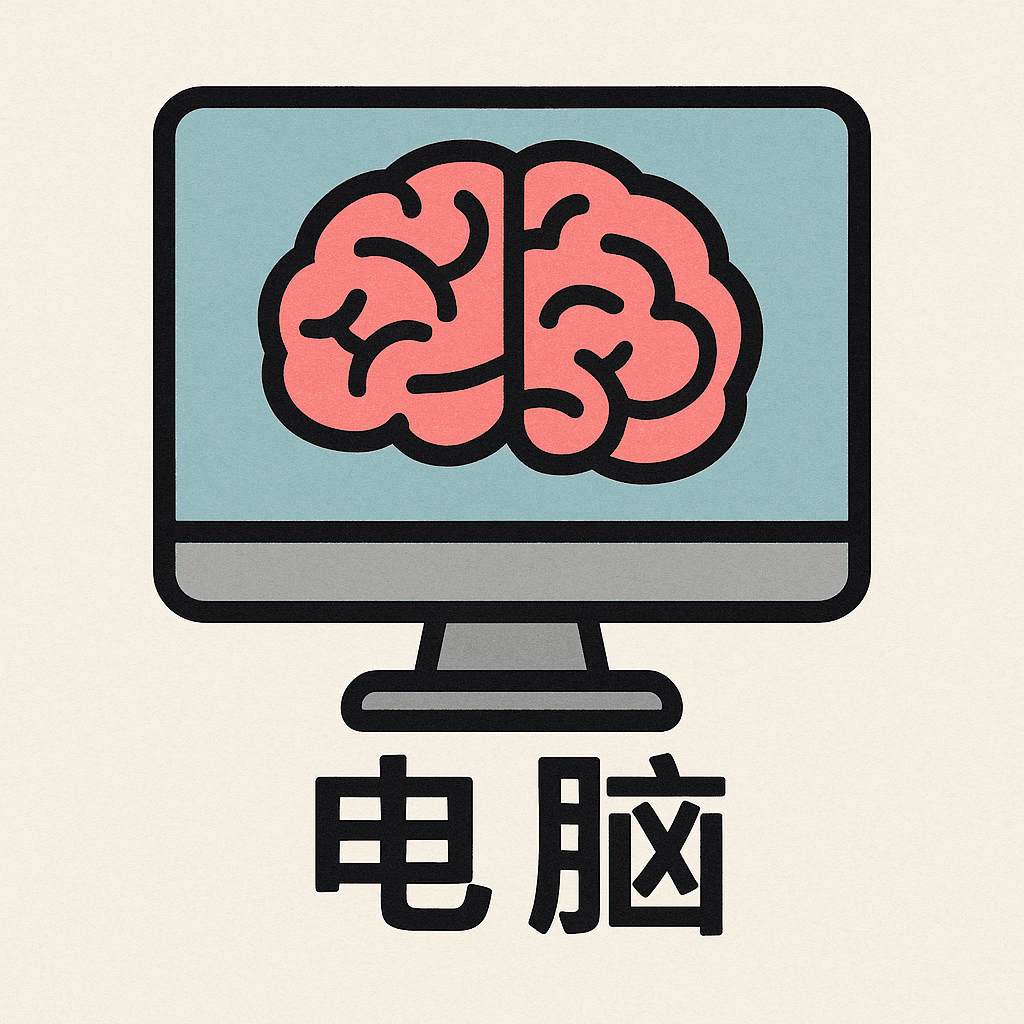
For AI, this represents a structural advantage. Instead of memorizing thousands of disconnected words, it learns a compositional system. Patterns repeat. Meanings compound. This structure gives models more reusable semantic blocks and reduces redundancy in vocabulary learning.
It’s like teaching a child mathematical formulas instead of asking them to memorize every possible answer.
Result? Potentially faster, more efficient learning with less data.
The Density Hack: More Meaning, Fewer Tokens
One Chinese character equals one syllable and a complete meaning.
In many contexts, written Chinese can express similar content using fewer tokens, though the exact ratio varies by topic and style. For AI processing text, this density means:
- Faster information processing
- Richer context packed into limited memory windows
- More conceptual connections with fewer tokens
This efficiency doesn’t automatically make Chinese “better,” but it does change how language models compress and represent information.
Time Travel Data: Reading Ancient Texts Like Yesterday’s News
Here’s something remarkable: With some training, modern readers can access classical texts from over 2,000 years ago. The character for “horse” (马) has barely changed since ancient times.
For AI, this continuity means:
- Access to training data spanning millennia
- A continuous record of human expression and conceptual evolution
- A stable foundation for modeling how ideas change over time
Try reading a paragraph of Old English from a thousand years ago—good luck. Now imagine training an AI on it.
This linguistic continuity gives models unusually deep historical corpora, a rare advantage in global languages.
Hidden Logic: Visual Stories in Every Character
Many Chinese characters encode tiny visual narratives:
- “休” (rest) = a person leaning against a tree
- “明” (bright) = sun and moon together
- “好” (good) = woman + child
An AI analyzing millions of such components may develop more intuition about visual relationships and semantic clustering—almost like built-in training wheels for common-sense reasoning.
Even though modern characters are more abstract than their ancient forms, these semantic hints still shape how models group meaning.
The Reality Check: No Magic Bullets
Let’s be real—Chinese isn’t a guaranteed “win button” for AI:
- Characters are complex and harder to learn at the start
- Heavy reliance on context creates ambiguity
- Chinese content was historically underrepresented online
- Different strengths don’t equal universal superiority
Language shapes AI behavior, but architecture, data quality, and compute remain the dominant factors.
The Bottom Line: Diversity Is the Real Superpower
The Chinese language doesn’t make AI smarter—it makes AI different. And different is exactly what global AI needs.
Linguistic diversity becomes a strategic asset:
- English contributes clarity and structural regularity
- Chinese contributes density and semantic composition
- Arabic contributes morphological richness
- Many others contribute unique logic and worldview
The future of AI won’t be written in a single language—it’ll be a symphony.
So the next time you see a breakthrough from a Chinese AI lab, remember: those ancient characters brushed onto bamboo slips might have more to do with it than you think. The world’s oldest writing system still in use may become one of the newest frontiers in artificial intelligence.