
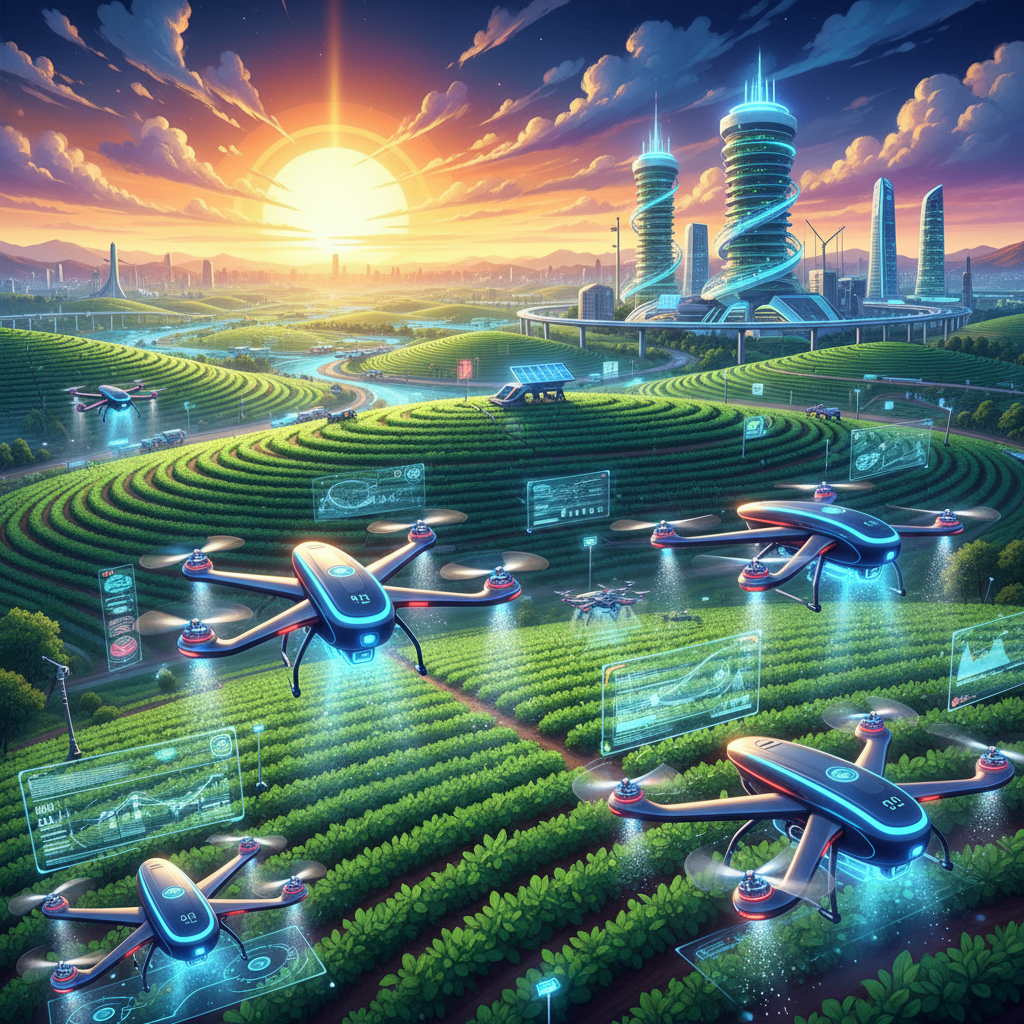
Farming has always been a demanding profession, heavily reliant on weather, soil health, and precise timing. A missed pest infestation or an under-watered field can ruin an entire season of hard work. To combat these challenges, farmers are looking to the sky. Chinese agricultural drones are fundamentally changing how we grow food. These high-tech flyers provide actionable data, automate difficult tasks, and help maximize crop yields.
This post explores the diverse applications of Chinese drones in farming. You will learn how these aerial tools drive precision agriculture, manage pests, monitor crop health, and improve irrigation. We will also look at the specific companies leading this charge and the technological advancements making it all possible.
The Shift Toward Precision Farming
Precision farming means doing the right thing, in the right place, at exactly the right time. Instead of treating a massive field as a single unit, farmers now manage variations within the field itself. Chinese drones serve as the ultimate tool for this customized approach. They allow farm managers to map entire fields quickly and gather highly accurate data about crop conditions.
This aerial perspective removes the guesswork from daily farming operations. Farmers no longer have to walk miles of rows to check on plant health. The drone captures everything from above, feeding the data into software that pinpoints problem areas immediately. This level of precision allows farmers to apply fertilizers, water, and pesticides exactly where they need them, eliminating waste.
Key Applications of Agricultural Drones
Drones do much more than just take pretty pictures from above. Modern Chinese agricultural drones act as heavy-duty workhorses equipped with sophisticated sensors and spraying mechanisms.
Targeted Pest Control and Spraying
Applying pesticides and fertilizers used to require heavy machinery that compacted the soil or crop dusters that sprayed chemicals indiscriminately over wide areas. Drones offer a much smarter alternative. Models equipped with intelligent spraying systems adjust their output based on their speed and altitude. This ensures an even coat across the plants.
Because drones fly much closer to the crops than traditional aircraft, they drastically reduce chemical drift. The downward airflow from the drone’s propellers also helps push the chemicals deep into the crop canopy, covering both the top and bottom of the leaves. This targeted approach means farmers use fewer chemicals, which saves money and protects the surrounding environment.
Advanced Crop Monitoring
Catching a plant disease early often makes the difference between a successful harvest and a total loss. Drones equipped with multispectral cameras can see things the human eye cannot. They capture data across various light bands to calculate the Normalized Difference Vegetation Index (NDVI). This index highlights exactly which plants are thriving and which ones are under stress.
Chinese drone manufacturers have seamlessly integrated these cameras into their platforms. Farmers can fly a drone over a field in the morning, process the data over a cup of coffee, and have a detailed map of crop health before noon. They can then dispatch workers directly to the stressed areas to investigate the cause, whether it is an irrigation leak, a nutrient deficiency, or a sudden pest outbreak.
Smart Irrigation and Seeding
Proper water management remains a massive hurdle for agriculture worldwide. Drones equipped with thermal cameras help farmers identify dry patches in their fields. By spotting these thermal anomalies, farmers can adjust their irrigation systems to deliver water only where the crops actually need it.
Furthermore, specialized drones now handle aerial seeding. Using advanced dispensing payloads, these drones shoot seeds directly into the soil. This method proves especially useful for planting cover crops or navigating steep, difficult terrain where heavy tractors simply cannot go.
Leading Chinese Companies Driving Innovation
China dominates the global commercial drone market, and agricultural drones are a major focus for its top tech companies. Two brands stand out for their massive contributions to farming technology.
DJI Agriculture
DJI is a household name in consumer drones, but their Agras line represents a massive leap in farming technology. The DJI Agras T40, for example, features a massive payload capacity capable of carrying dozens of liters of liquid or solid fertilizer. It uses dual atomized spraying systems to ensure highly efficient chemical application. DJI also incorporates omnidirectional radar and binocular vision, allowing the drone to dodge trees and power lines autonomously.
XAG
XAG focuses almost entirely on agricultural technology. They build drones specifically designed to withstand the harsh realities of farm work, including dust, water, and constant use. Their drones often integrate with intelligent farm management software, allowing a single operator to control a swarm of drones simultaneously. XAG places a heavy emphasis on fully autonomous flights, reducing the need for highly skilled pilots on the farm.
Efficiency, Costs, and Sustainability
The adoption of Chinese drone technology brings three massive benefits to the agricultural sector: improved efficiency, lowered operational costs, and enhanced sustainability.
By automating tasks like spraying and mapping, farmers save countless hours of manual labor. A single high-capacity drone can cover dozens of acres in an hour, a task that would take ground equipment much longer. This speed allows farmers to act quickly when weather windows are tight.
Cost reductions happen across the board. Farmers spend less on fuel for heavy tractors, less on wasted water, and significantly less on expensive chemical inputs. Because the drone targets only the areas that need treatment, chemical usage drops dramatically.
Finally, these drones promote sustainable farming practices. Lower chemical usage means less runoff into local waterways. Using battery-powered drones instead of diesel tractors lowers greenhouse gas emissions. Precision agriculture naturally aligns with environmental stewardship, and drones serve as the primary catalyst for this shift.
Next Steps for Farm Managers
Chinese drone technology offers an accessible, highly effective way to modernize your farming operations. If you want to integrate these tools into your workflow, consider taking these practical steps:
- Evaluate your biggest pain points. Determine if you struggle more with crop monitoring, pest control, or mapping.
- Research local regulations regarding commercial drone flights and chemical applications in your region.
- Contact a local distributor for companies like DJI or XAG to arrange a demonstration on your property.
- Start small. Invest in a mapping drone first to understand your field’s topography and health before committing to a larger, heavier spraying drone.