
Key Tips: Chinese firefighters, emergency response, fire rescue, occupational training

Guardians in Flames: The Mission and Daily Life of Chinese Firefighters
The alarm rings abruptly, and within seconds, hurried footsteps echo from the second-floor dormitory. Firefighters pull on their gear as they sprint, and in less than a minute from receiving the call, red fire trucks are already speeding out of the station. This scene unfolds daily at fire and rescue stations across Chinese cities.
As evening falls, fire trucks line up again, their polished bodies reflecting the lights—a testament to the preparedness of these firefighters who tackle “all types of disasters and major emergencies.”
Firefighters in China are professionals engaged in fire suppression, rescue operations, social assistance, and other emergency response duties. They are required to dispatch the first vehicle within 45 seconds, even in the dead of night.
Duties and Categories
The primary responsibilities of Chinese firefighters include extinguishing fires, conducting rescue operations, inspecting fire safety facilities, and promoting fire safety awareness. Beyond these core tasks, they also participate in medical assistance, public services, water source inspections, and internal station duties.
Based on their organizational structure, Chinese firefighters are categorized into:
-
National Comprehensive Fire and Rescue Team firefighters
-
Local government full-time firefighters
-
Enterprise and institution full-time firefighters
-
Volunteer firefighters
Rigorous Training
The daily routine of firefighters is built on strict training, focusing on physical fitness, technical skills, and mental resilience.
At 6:30 a.m., the wake-up call signals the start of morning exercises. Even in the coldest weather, firefighters break a sweat during these sessions. Physical training includes pull-ups, 10m×4 shuttle runs, 1000-meter runs, and vertical jumps.
Modern firefighting training emphasizes developing comprehensive response capabilities in complex scenarios, forming a three-dimensional training model that prioritizes physical fitness as the foundation, intelligence as the core, and teamwork as the key.
Emergency Response
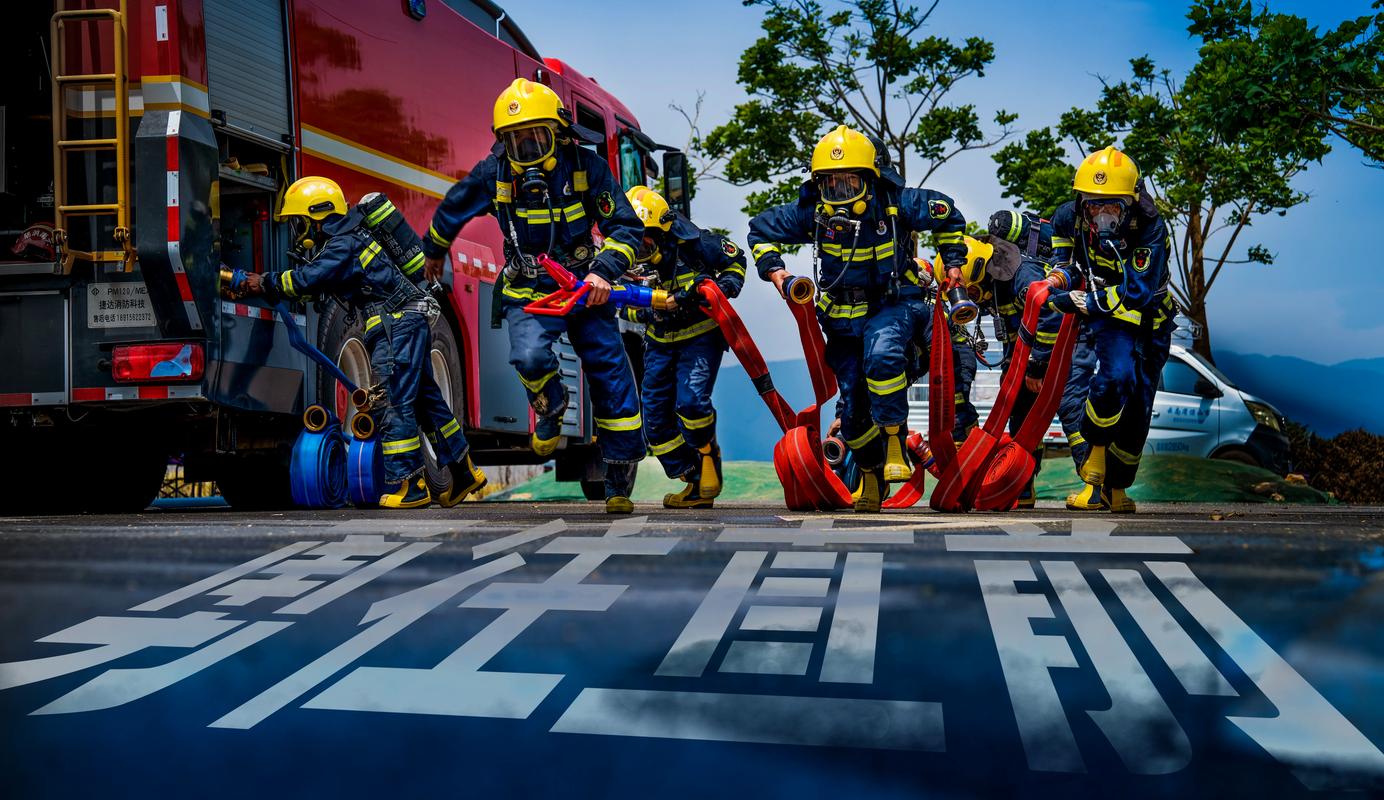
At special duty stations, when the alarm sounds, firefighters dash out of their dormitories while pulling on their gear—all within three seconds. In under a minute, fire trucks are already on the move.
The protective gear they wear weighs over 60 pounds. “From putting on protective boots and pants to donning the jacket, headgear, and equipment, the entire process must be completed within 30 seconds.” In scorching summer weather, returning from a call, their uniforms can be wrung out to fill half a basin with sweat.
Recruitment and Benefits
In 2025, the National Comprehensive Fire and Rescue Team plans to recruit 12,500 firefighters. Recruitment targets include recent university graduates, retired soldiers, and eligible members of the public.
Firefighters’ compensation is jointly funded by central and local government budgets, covering base salary, allowances, reform subsidies, performance bonuses, and contributions to social insurance and housing funds.
In terms of social standing, firefighters enjoy a benefit system aligned with their rank and role, including preferential treatment for family support, children’s education, housing, healthcare, and transportation.
Career Development
In October 2018, China’s public security firefighting forces and armed forest firefighting units were restructured to form the National Comprehensive Fire and Rescue Team. In 2025, four new specializations were added under the firefighter profession, including special rescue operator and forest firefighter.
In December of the same year, the State Council executive meeting discussed and preliminarily approved the National Fire and Rescue Personnel Law (Draft), marking a step toward China’s first specialized legislation regulating the rights, duties, and responsibilities of fire and rescue personnel.
The exit mechanism for firefighters includes options such as one-time settlement, phased placement, job transfers, and retirement. Those with 12 years of service may opt for job transfer arrangements, while those with 20 years can choose to receive a monthly exit allowance until retirement.
Resilience in Action
In the depths of winter, training uniforms are drenched in sweat; in the heat of summer, firefighting boots can pour out puddles of water. This is how every training day begins and ends at fire and rescue stations across China.
“As young people, we can choose many paths, but we are proud to wear the ‘Flame Blue,’” wrote one firefighter in a training log. Firefighters train for over five hours daily in physical and technical drills, even during the Spring Festival.
Though they have no fixed working hours or weekends off, their message is clear: “Rest assured, we are always here.” This is not just a promise—it is the reality of Chinese firefighters, who remain on duty 365 days a year, ever ready to respond.