
Quick Tips for Understanding the Trend
-
Listen for Dialects: Chinese rap isn’t just Mandarin; heavyweights like the Higher Brothers use Sichuanese dialects, adding a unique percussive flow that rivals English.
-
Watch the Platforms: Shows like The Rap of China (IQIYI) catalyzed the industry, but international platforms like 88rising have been the bridge to Western audiences.
-
Notice the Fusion: The sound often blends modern trap beats (specifically Memphis-style flows) with traditional Chinese instrumentation, creating a distinct sonic identity.
From Underground to Mainstream: The Explosion
The rapid evolution of hip-hop in China has never been more vividly encapsulated than by the sudden, viral triumph of Lan Lao (揽佬). In late 2025 and early 2026, the group’s breakout single “Blueprint Supreme” didn’t just dominate streams in China but rocketed onto global playlists, drawing comparisons with reggaeton’s worldwide surge and sparking headlines in outlets like Bloomberg. The group’s swaggering performance, catchy hooks, and effortless blending of local dialects and modern trap beats caught the attention of listeners from New York to São Paulo. For many international fans, Lan Lao became a gateway into the world of Chinese rap, representing something both distinctly Chinese and unmistakably fresh on the global music scene.
What makes the Lan Lao phenomenon so remarkable isn’t just the group’s massive streaming numbers or their ability to pack stadiums across East Asia. Their success marks a turning point: where earlier Chinese acts struggled to break language and cultural barriers, Lan Lao rides the international appetite for genre-blending, cross-cultural sounds. Their incorporation of Memphis-style flows, local slang, and classic Chinese melodic samples has resulted in a sound that is unapologetically homegrown yet instantly global. Western artists and producers, once hesitant to partner with Chinese rappers, are now reaching out for collaborations, from co-headlining tours to vibrant remixes.
Culturally, Lan Lao has gone beyond music, igniting fashion trends (the group’s signature oversized jackets and designer sneakers are now streetwear staples in major Asian and Western cities), sparking viral Douyin and TikTok dance challenges, and bringing phrases from southern Chinese dialects into everyday youth conversation around the world. For the post-pandemic generation—digitally connected and linguistically adventurous—Lan Lao represents a new breed of Chinese pop culture: bold, multicultural, and ready to define the next wave of global music.
This surge is the culmination of years of groundwork. For decades, hip-hop existed in China’s underground: nurtured in the clubs of Beijing, Shanghai, and Chengdu, with pioneers like Yin Ts’ang, In3, and early Chengdu crews giving voice to urban youth anxieties. Yet none of these earlier movements reached the mass, international resonance that Lan Lao now commands. The viral “Ma La Flow” serves as a watershed, showing that Chinese rap can play by global rules while forging its own cultural path.
Of course, the genre’s climb to mainstream status was already boosted in 2017 by the launch of The Rap of China, the reality show that turned underground rappers into celebrities. But if The Rap of China industrialized the scene, it was Lan Lao who globalized it, shifting the aspirations of countless young artists from local fame to worldwide recognition. International media now speak of Guangzhou and Chengdu in the same breath as Memphis and Atlanta when discussing future hip-hop capitals.
The Chengdu and Trap Connection
Within this larger narrative, the Southwest—especially Chengdu—remains a creative engine, known for its relaxed vibe, trap-infused rhythms, and dialect-driven lyrics. Artists like Higher Brothers introduced the formula, but groups like Lan Lao have perfected and exported it, leveraging both local and international influences. Their rise signals that Chinese hip-hop is no longer an outsider—it’s a contender on the world stage.
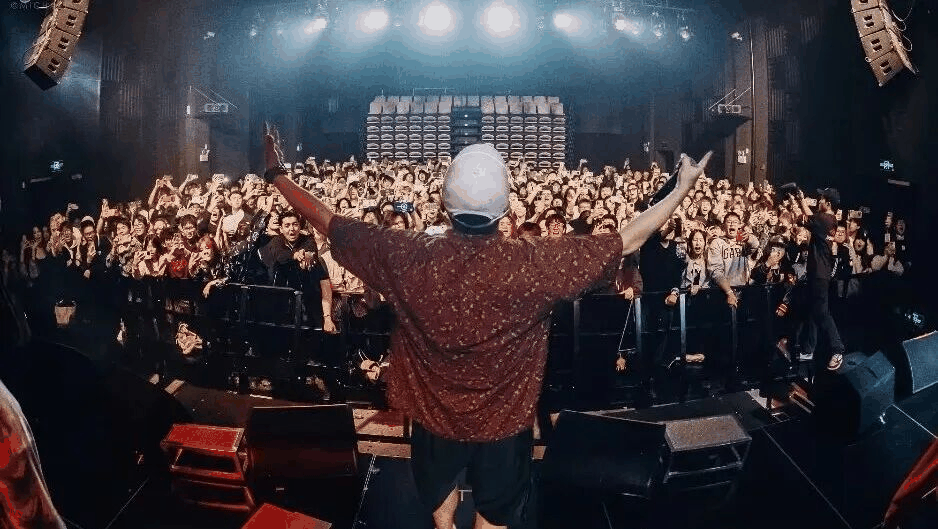
The international success of Chinese hip-hop cannot be discussed without mentioning 88rising. This New York-based media company and label positioned itself as the bridge between Asian artists and Western youth culture.
By signing acts like the Higher Brothers and Jackson Wang, 88rising packaged Chinese talent in a way that resonated with global audiences. They didn’t market these artists as “foreign” novelties but as legitimate players in the global hip-hop conversation. Collaborations with American heavyweights like Travis Scott, Schoolboy Q, and Snoop Dogg further validated the scene, proving that the language barrier was secondary to the vibe and flow.
Cultural Hybridity: “Local” meets “Global”
What makes Chinese rap particularly fascinating to international listeners is its hybrid nature. It is not simply an imitation of American styles.
-
Lyrical Content: While navigating strict censorship regulations, Chinese rappers have pivoted away from typical Western themes of violence and drugs. Instead, they often focus on Chinese pride, material success, personal ambition, and respect for family.
-
Sonic Texture: Producers often weave in traditional instruments like the guzheng or erhu, creating a soundscape that is instantly recognizable as Chinese yet fundamentally hip-hop.
Challenges and Future Trajectory
Despite its massive growth, the industry faces challenges. The balance between creative expression and regulatory compliance is delicate. In 2018, there was a brief crackdown on hip-hop culture in media, leading to a “cleanup” of lyrics and imagery. However, the genre proved too popular to suppress. Artists adapted, blending patriotic themes with street culture to survive and thrive.
Looking ahead, the future of Chinese hip-hop appears increasingly global. As the diaspora community grows and digital platforms erase geographical borders, the “Chinese” element of the music becomes a stylistic flavor rather than a barrier. We are seeing a shift from “Chinese rappers trying to break America” to a self-sustaining ecosystem where Chinese rap stands as a formidable genre on its own merits, influenced by Memphis, Atlanta, and New York, but rooted firmly in the East.