
Pinyin bridges Latin alphabet familiarity with Chinese pronunciation
Chinese might seem impossibly complex to newcomers—thousands of characters, tonal pronunciation, no alphabet. Enter Pinyin: a brilliant system that uses the familiar Latin alphabet to represent Mandarin Chinese sounds. For over 65 years, this tool has transformed how Chinese people learn to read and how the world learns Chinese.
What Exactly is Pinyin?
Hanyu Pinyin (汉语拼音, literally “Chinese phonetic spelling”) is the official romanization system for Standard Mandarin Chinese. It uses the 26 letters of the Latin alphabet—the same one used for English—to represent the sounds of Chinese characters.
Here’s the key insight: Pinyin isn’t a replacement for Chinese characters. It’s a pronunciation guide, a learning tool, and a typing method. Think of it as training wheels for reading Chinese—helpful when learning, still useful when you need it, but not the final destination.
Example:
- Chinese character: 你好
- Pinyin: nǐ hǎo
- Meaning: hello
- The marks above letters indicate tones (more on that later)
Why China Needed Pinyin
The Literacy Crisis
When the People’s Republic of China was founded in 1949, approximately 80% of the population couldn’t read or write. Chinese characters are notoriously difficult—even educated people might know “only” 3,000-5,000 characters (literacy requires around 2,500-3,000).
The problem was circular: to learn characters, you need to know pronunciation. But without an alphabet, how do you learn pronunciation? Ancient methods like “fanqie” (反切, using two known characters to indicate the sound of an unknown one) were too complex for mass literacy campaigns.
The Solution: A Phonetic System
In 1955, the government formed a committee of linguists to develop a phonetic system accessible to everyone. The goal wasn’t revolutionary—similar systems had been proposed since the 1600s by Western missionaries like Matteo Ricci. But this time, China committed to a comprehensive, standardized, nationwide approach.
After three years of research, debate, and refinement, the Hanyu Pinyin Scheme was officially approved by the National People’s Congress on February 11, 1958.
How Pinyin Works
Pinyin represents Chinese sounds through three components:
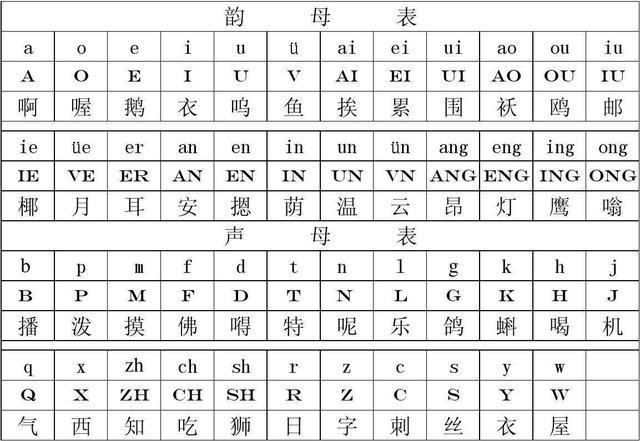
1. Initials (Consonants/声母)
The beginning sound of a syllable. There are 23 initials:
Examples:
- b (不 bù) - like ‘b’ in “bee” but unaspirated
- p (跑 pǎo) - like ‘p’ in “pie”
- m (妈 mā) - like ‘m’ in “mom”
- f (飞 fēi) - like ‘f’ in “fly”
Tricky ones for English speakers:
- q (七 qī) - like ‘ch’ in “cheap” but said with more air
- x (西 xī) - like ‘sh’ in “sheet” but with tongue further forward
- zh (中 zhōng) - like ‘j’ in “judge” but with tongue curled back
2. Finals (Vowels/韵母)
The ending sound of a syllable. There are 24 finals, including simple vowels (a, o, e, i, u, ü) and compound combinations.
Examples:
- a (啊 ā) - like ‘a’ in “father”
- e (鹅 é) - like ‘er’ in British “her” (without the ‘r’)
- i (衣 yī) - like ‘ee’ in “see”
- u (乌 wū) - like ‘oo’ in “food”
- ü (鱼 yú) - like French ‘u’ or German ‘ü’ (round lips while saying ‘ee’)
3. Tones (声调)
This is where Chinese gets interesting. The same syllable pronounced with different tones becomes different words with different meanings.
Four Main Tones + Neutral:
- First tone (ˉ): High and flat - mā (妈, mother)
- Second tone (ˊ): Rising - má (麻, hemp/numb)
- Third tone (ˇ): Falling then rising - mǎ (马, horse)
- Fourth tone (ˋ): Sharply falling - mà (骂, scold)
- Neutral tone: No mark - ma (吗, question particle)
The famous example: “Māma qí mǎ, mǎ màn, māma mà mǎ” (妈妈骑马,马慢,妈妈骂马) - “Mother rides a horse, the horse is slow, mother scolds the horse.”
How Pinyin Transformed China
Education Revolution
Within 60 years of Pinyin’s adoption, China’s literacy rate soared from 20% to over 95%. Children now learn Pinyin in kindergarten before tackling characters. This phonetic foundation makes character learning dramatically faster.
The standardized pronunciation also helped unify the country linguistically. Before Pinyin, Mandarin proficiency varied wildly. Today, over 70% of Chinese people can speak Mandarin, largely thanks to Pinyin-based education.
Digital Age Enabler
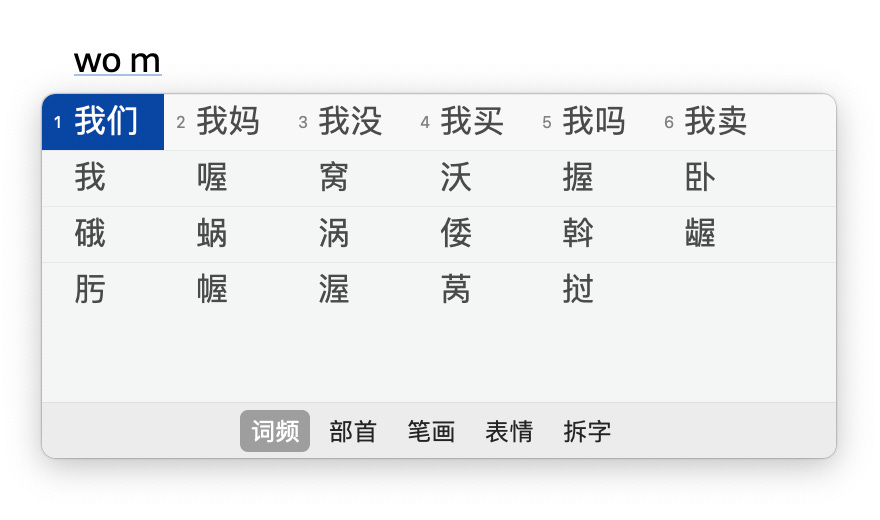
Typing Chinese became accessible through Pinyin input methods
When computers arrived, Chinese faced a crisis: how do you type thousands of characters? Pinyin provided the answer. Modern Chinese typing uses Pinyin input methods:
- Type “zhongguo” using a standard keyboard
- Software offers character options: 中国 (China), 中果, etc.
- Select the right characters
This simple innovation allowed Chinese to participate fully in the digital revolution. Without Pinyin, the information age might have passed China by.
International Bridge
Pinyin serves as the world’s gateway to Chinese. When foreigners learn Mandarin, they almost always start with Pinyin. It provides familiar letter-based entry into an unfamiliar sound system.
In 1977, the United Nations adopted Pinyin as the standard for romanizing Chinese place names. “Peking” became “Beijing.” “Canton” became “Guangzhou.” In 1982, Pinyin became international standard ISO 7098.
Today, Pinyin words appear in English dictionaries: “tuhao” (土豪, nouveau riche), “dama” (大妈, middle-aged woman), even “guanxi” (关系, connections) entered the Oxford English Dictionary using Pinyin spelling.
Who Created Pinyin?
While Pinyin built on centuries of romanization attempts, Zhou Youguang (1906-2017) is recognized as its primary architect. A linguist and economist, Zhou led the team that refined earlier proposals into the elegant system we use today.
Zhou humbly said: “I’m not the father of Pinyin, I’m the son of Pinyin. It’s the result of a long tradition… we revisited it and made it more perfect.”
The development team included renowned linguists like Wang Li, Lu Zhiwei, Luo Changpei, and others who integrated early Latinization foundations with modern phonetic principles.
Pinyin Beyond Mainland China
Singapore: Officially adopted Pinyin for Chinese education
Taiwan: Started using Pinyin for official romanization in 2008 (though other systems remain for some purposes)
Hong Kong/Macau: Use Cantonese-based romanization but increasingly recognize Pinyin
Global Chinese Education: Virtually all Mandarin programs worldwide teach Pinyin as the foundation
Common Misconceptions
“Pinyin will replace Chinese characters” No. Pinyin is a tool, not a replacement. Chinese characters carry meaning that pure phonetic writing cannot convey (remember: many syllables sound identical but mean different things).
“Only foreigners use Pinyin” False. Native Chinese children learn Pinyin before characters. Adults use it daily for typing, looking up unfamiliar characters, and teaching children.
“Pinyin pronunciation = English pronunciation” Not quite. While Pinyin uses Latin letters, the sounds don’t always match English. ‘Q’, ‘X’, ‘C’, ‘Z’, ‘ZH’, ‘CH’, ‘SH’ require careful study.
“You can read Chinese if you know Pinyin” No. Pinyin shows pronunciation, not meaning. You must learn characters to read Chinese. Pinyin is the map, not the territory.
Learning Pinyin: Practical Tips
Start with the basics:
- Master the four tones—they’re not optional decoration
- Learn initials and finals systematically
- Practice combinations repeatedly
- Use Pinyin charts and audio resources
Common challenges:
- Distinguishing ‘zh/ch/sh’ from ‘z/c/s’
- Pronouncing ‘ü’ correctly
- Remembering tone marks
- Understanding tone change rules (third tone becomes second before another third)
Resources:
- Pinyin charts with audio
- Apps like Pleco or HelloChinese
- YouTube pronunciation guides
- Native speaker practice partners
The Future of Pinyin
Pinyin continues evolving with technology. Voice recognition, AI language tools, and digital education platforms all rely on Pinyin as the foundation. As China’s global influence grows, more people worldwide encounter Pinyin on packaging, signs, and media.
Some predict that as machine translation improves, Pinyin’s importance might diminish. But history suggests otherwise—having a shared phonetic standard becomes more valuable as communication increases, not less.
Conclusion
Hanyu Pinyin represents one of the 20th century’s most successful language reforms. In just 65 years, it transformed Chinese literacy, enabled digital communication, and became the international standard for romanizing Mandarin.
For learners, Pinyin is the essential first step into Chinese. For native speakers, it’s the daily tool for typing and teaching. For the world, it’s the bridge connecting Chinese language and global communication.
Whether you’re seeing “Beijing” on a map, typing “nihao” on your phone, or learning your first Chinese words, you’re experiencing the elegant solution Zhou Youguang and his colleagues created in the 1950s—a solution that turned the Latin alphabet into a key for unlocking Chinese, transforming both China and global understanding of the world’s most spoken language.
To explore interactive Pinyin charts and pronunciation guides, visit educational resources like YellowBridge, PinyinPractice, or the official Hanban (Confucius Institute) materials.