
Quick Tips for Tracking Space Trends
- Watch the Tiangong Station: Follow updates from China’s Tiangong space station, as it is now fully operational and hosting international experiments, signaling a shift in global scientific collaboration.
- Monitor Lunar Missions: Keep an eye on the Chang’e program. Future missions aim to establish a research base on the moon, a critical step for deep space exploration.
- Check Commercial Growth: Don’t just look at government agencies; China’s private commercial space sector is booming, with startups developing reusable rockets similar to SpaceX.
The Rapid Ascent of China’s Space Capabilities
Just a few decades ago, the idea of China as a primary competitor in the cosmos seemed distant. Today, it is a reality. The nation’s space program has achieved milestones at a pace that has surprised many international observers. This rapid ascent is not merely about planting flags; it is about establishing a sustained, long-term presence beyond Earth’s atmosphere.
China’s approach is characterized by methodical planning and consistent execution. Unlike the erratic funding cycles that sometimes plague other national programs, China has maintained a steady trajectory of investment and development. This consistency has allowed them to master complex technologies, from human spaceflight to deep space robotic exploration, in a relatively short timeframe.
Mastering Human Spaceflight
The crown jewel of China’s recent achievements is undoubtedly the Tiangong space station. Completed in late 2022, this modular station represents a massive leap in orbital capabilities. It is not just a habitat; it is a sophisticated laboratory where taikonauts (Chinese astronauts) conduct cutting-edge research in microgravity, astronomy, and Earth observation.
With the International Space Station (ISS) nearing its potential retirement in the coming decade, Tiangong stands poised to become the only operational space station in orbit for a period. This positions China as a central hub for global scientific cooperation, attracting partners from Europe, Asia, and beyond who wish to utilize its facilities.
Expanding Horizons: Moon, Mars, and Beyond
China’s ambitions extend far beyond low Earth orbit. The Chang’e lunar program has been a resounding success, delivering a series of historic firsts.
The Lunar Ambition
China became the first nation to soft-land a spacecraft on the far side of the moon with Chang’e-4. This mission demonstrated advanced communication capabilities via relay satellites, solving a problem that had deterred explorers for decades. Subsequent missions, like Chang’e-5, successfully returned lunar samples to Earth—a feat not accomplished since the 1970s.
Looking ahead, the roadmap includes the International Lunar Research Station (ILRS), a planned joint venture with Russia. This project aims to establish a permanent robotic—and eventually human—presence on the lunar surface, directly competing with NASA’s Artemis program.
The Red Planet and Deep Space
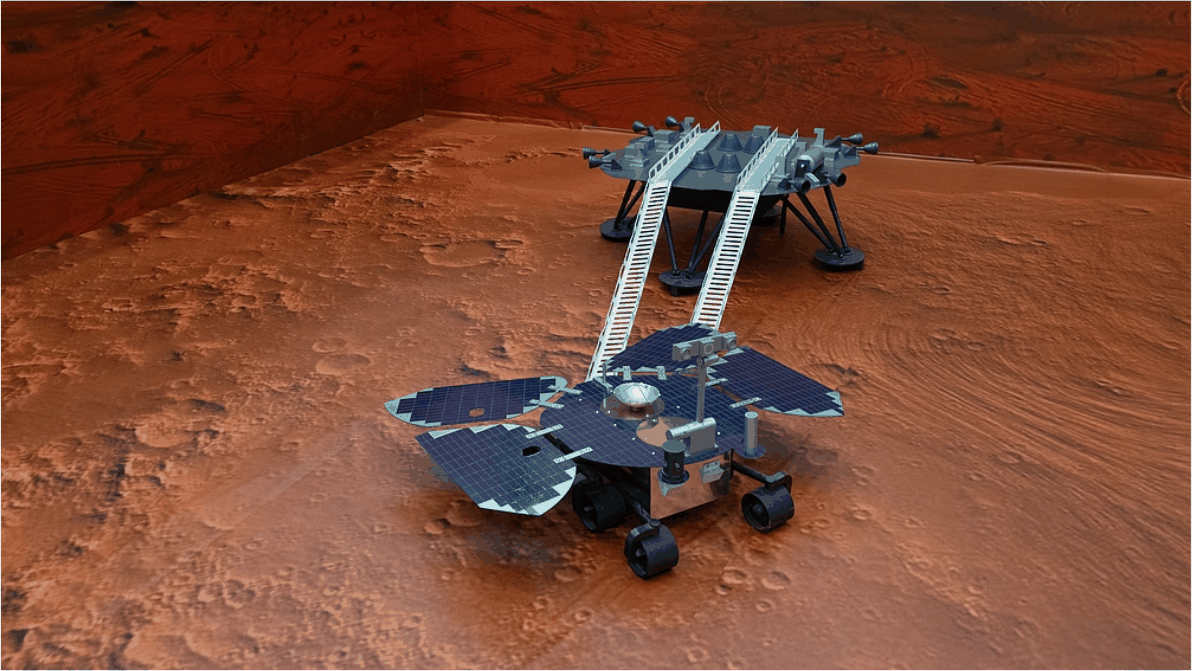
In 2021, China successfully placed a rover, Zhurong, on the surface of Mars during its first independent mission to the Red Planet. This made China only the second nation after the United States to successfully land and operate a rover on Mars. The success of the Tianwen-1 mission showcased China’s growing deep-space tracking and control capabilities, proving they can navigate the complex challenges of interplanetary travel.
The Rise of Commercial Space and Global Influence
While state-led initiatives grab headlines, a quiet revolution is happening in the private sector. The Chinese government has opened the door for private companies to enter the industry, leading to a surge in commercial space startups.
Commercial Launch Capabilities
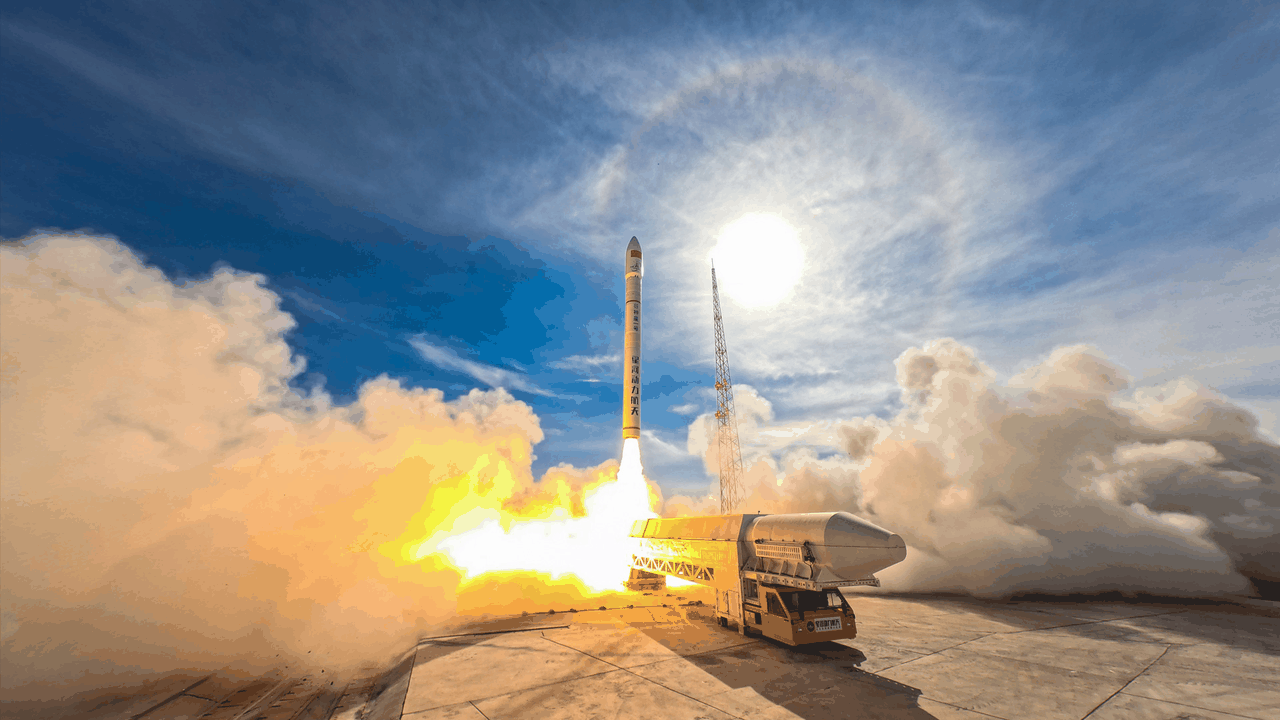
Companies like iSpace, Galactic Energy, and LandSpace are developing their own launch vehicles, aiming to reduce the cost of access to space. LandSpace, for instance, beat global competitors (including SpaceX) to launch the world’s first methane-liquid oxygen rocket into orbit. These commercial entities are crucial for building a robust satellite internet constellation, similar to Starlink, which China views as essential for both economic and strategic infrastructure.
Global Strategic Implications
The expansion of China’s space capabilities has profound geopolitical implications. By offering satellite launch services, space infrastructure development, and data sharing to developing nations—often as part of the broader Belt and Road Initiative—China is building new alliances. This “Space Silk Road” enhances China’s global soft power, positioning it as a technological leader and a preferred partner for nations looking to develop their own space assets.
Conclusion
The current state of China’s space technology is one of robust health, rapid innovation, and strategic expansion. No longer catching up, China is now setting the pace in several arenas of exploration. For the global community, this signifies a new era of multipolar space competition and cooperation. As China continues to push the boundaries of what is possible, from the lunar south pole to the dusty plains of Mars, the world watches with a mix of admiration and vigilance. The future of humanity in space will undoubtedly be shaped significantly by the decisions and developments made in Beijing.