
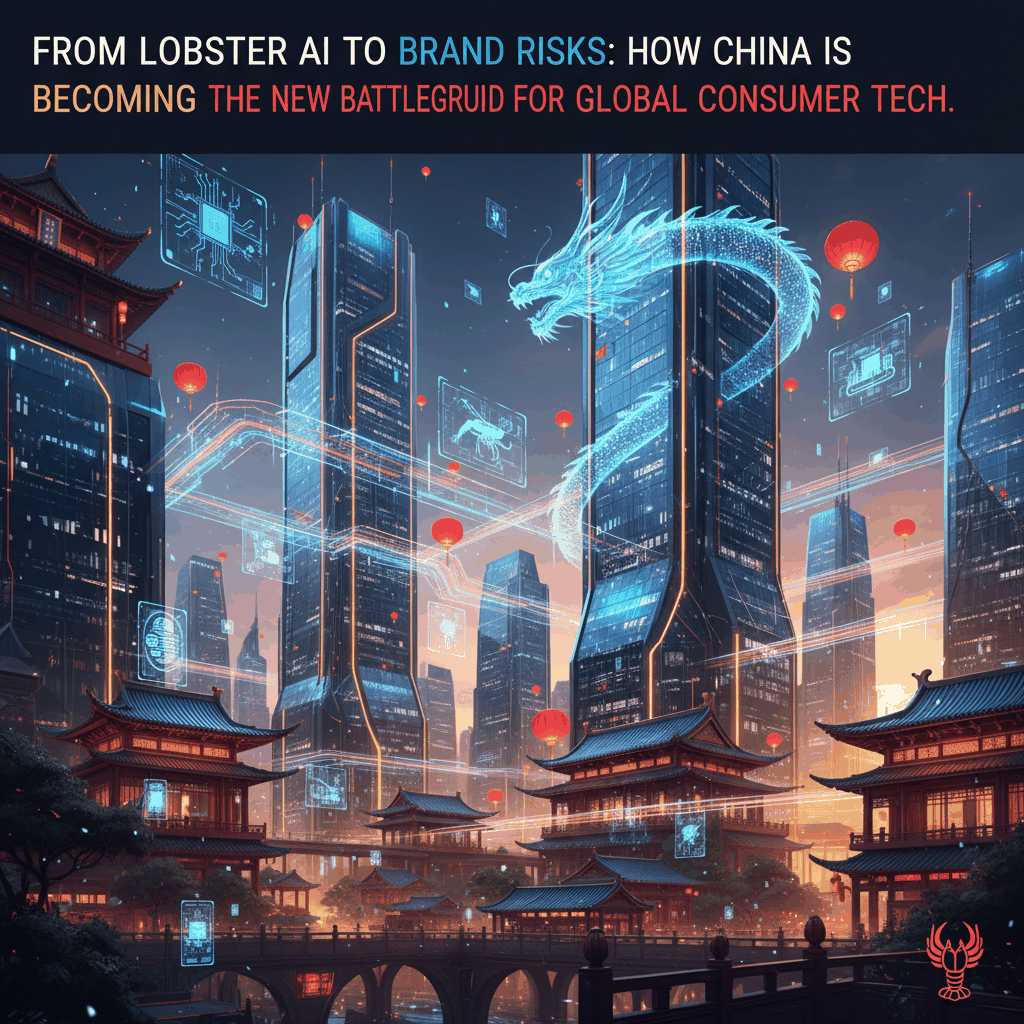
Imagine a smart appliance that knows exactly how to cook a regional delicacy to perfection, adjusting its temperature based on local humidity and user preferences. This hyper-specific, culturally attuned technology—often jokingly referred to as “Lobster AI” by industry insiders—highlights a massive shift. China is no longer just the world’s factory. It is the ultimate testing ground and battleground for global consumer technology.
Foreign brands previously viewed the Chinese market as a massive, untapped goldmine. Now, they face a complex ecosystem defined by lightning-fast innovation, fiercely loyal consumers, and strict regulatory frameworks. If your company operates in the consumer tech space, understanding this shift is not optional. It is critical for survival.
This post explores how China’s consumer tech landscape is evolving into a critical arena for global competition. We will examine the rise of highly specialized AI, the challenges foreign brands face, and what these market dynamics mean for the future of global tech.
The Rise of Hyper-Localized Innovation
Chinese tech companies excel at creating solutions tailored specifically to their consumers. They do not just adopt global trends; they mold them to fit domestic habits, creating a barrier to entry for outsiders who try to apply a one-size-fits-all approach.
The “Lobster AI” Phenomenon
The concept of “Lobster AI” represents the hyper-localization of technology. It refers to smart devices and algorithms trained on highly specific, culturally relevant data sets. For example, local tech companies develop smart home ecosystems that seamlessly integrate with popular Chinese messaging apps and e-commerce platforms.
These AI models understand local dialects, regional cooking methods, and distinct shopping habits better than any foreign equivalent. When a local AI can predict exactly what a consumer wants before they even search for it, foreign brands relying on generalized global algorithms struggle to compete. You cannot simply translate your app into Mandarin and expect to win market share.
Homegrown Giants Lead the Way
Local tech giants have transformed the competitive landscape. Companies that started as e-commerce or social media platforms are now dominant players in cloud computing, artificial intelligence, and smart hardware. They have built walled gardens that keep consumers entirely within their ecosystems.
These companies possess a distinct advantage: massive amounts of localized data. They use this data to iterate products at a speed that often leaves foreign competitors scrambling. A Western company might take two years to develop and launch a new smart wearable. A Chinese competitor can often spot the trend, design a localized alternative, and bring it to market in a fraction of that time.
Navigating Unique Market Dynamics
To succeed in China, global tech companies must understand how differently the market operates compared to North America or Europe. Consumer expectations are higher, and the path to purchase is deeply intertwined with entertainment and social media.
The Speed of Consumer Adoption
Chinese consumers adopt new technologies at an astonishing rate. Livestream commerce, for instance, evolved from a niche marketing tactic into a multi-billion dollar industry overnight. Consumers expect to watch a product demonstration, ask questions in real-time, and complete a purchase with a single tap, all without leaving their favorite video app.
This appetite for the new extends to hardware as well. The electric vehicle (EV) market perfectly illustrates this trend. Smart EVs in China are essentially computers on wheels, featuring advanced autonomous driving capabilities and in-car karaoke systems. Foreign automakers are finding that their traditional brand prestige matters less than the cutting-edge tech features demanded by modern Chinese buyers.
Shifting Consumer Allegiances
Another major hurdle for foreign brands is the rise of “Guochao,” or national pride in domestic brands. Chinese consumers, particularly younger generations, actively seek out local products. They no longer automatically equate foreign brands with superior quality.
This shift in consumer behavior forces global companies to rethink their positioning. You must prove your value to a skeptical audience that already has access to excellent, homegrown alternatives. Simply relying on brand legacy is a guaranteed path to irrelevance in this market.
Brand Risks and Regulatory Shifts
Operating in this lucrative market comes with significant risks. The regulatory environment is constantly shifting, and public relations disasters can happen in an instant. Global brands must tread carefully to avoid alienating consumers or running afoul of local laws.
Compliance and Data Security
China has implemented strict data privacy and security regulations in recent years. Laws governing data localization mean that companies must store user data on servers within the country. Furthermore, algorithms that influence consumer behavior are subject to intense scrutiny and regulation.
For global consumer tech companies, compliance is costly and complex. You must build isolated IT infrastructures for your Chinese operations while ensuring they still communicate effectively with your global systems. Failing to comply with these regulations can result in massive fines or complete removal from local app stores.
The Misstep Minefield for Foreign Brands
The Chinese internet is highly responsive, and consumer backlash can be swift and severe. A misjudged marketing campaign, an incorrect map, or a culturally insensitive product feature can trigger a massive boycott. This “cancel culture” moves faster in China than almost anywhere else, heavily amplified by local social media networks.
Foreign brands face a dual risk. They must remain culturally sensitive to local consumers while also managing their reputation back home. A decision made to appease the Chinese market can easily spark outrage in Western markets, placing global consumer tech companies in an impossible position. Navigating this diplomatic tightrope requires deep local expertise and extreme caution.
Implications for Global Tech Companies
The battleground in China offers a glimpse into the future of consumer tech worldwide. The strategies developed and tested here will inevitably influence global markets.
Adapt or Retreat?
Global tech companies face a stark choice: deeply localize their operations or exit the market entirely. We have seen several high-profile tech brands quietly scale back their Chinese operations after failing to capture market share.
Those who choose to stay must operate almost as independent local entities. They need local leadership teams, dedicated research and development centers, and the autonomy to make quick decisions. Treating China as just another regional sales office no longer works. You must empower your local teams to innovate and respond to competitors in real-time.
The Export of Chinese Tech Models
What happens in China does not stay in China. The business models and consumer behaviors pioneered there are rapidly exporting to the rest of the world. We already see this with the explosive global growth of Chinese short-video platforms and ultra-fast fashion e-commerce apps.
Global brands must pay attention to the Chinese market, even if they do not operate within it. The disruptive technologies and aggressive pricing strategies developed by Chinese firms will eventually arrive on your home turf. By studying the Chinese battleground, you can prepare your business for the next wave of global tech disruption.
Preparing for the Future
China’s transformation into the ultimate consumer tech battleground presents both a massive opportunity and a severe threat to global brands. The days of easy wins and relying on foreign brand mystique are completely over.
To thrive in this environment, companies must embrace hyper-localization. You need to invest heavily in understanding local consumer habits and adapt your products to meet highly specific demands. Furthermore, you must build robust compliance structures to navigate the complex regulatory landscape.
Start by auditing your current market strategy. Are your products truly localized, or just translated? Do your local teams have the power to make rapid decisions? By answering these questions honestly, you can begin to build a resilient strategy that not only survives the Chinese market but learns from it. The global tech landscape is shifting, and the companies that master this new battleground will dictate the future of consumer technology.