
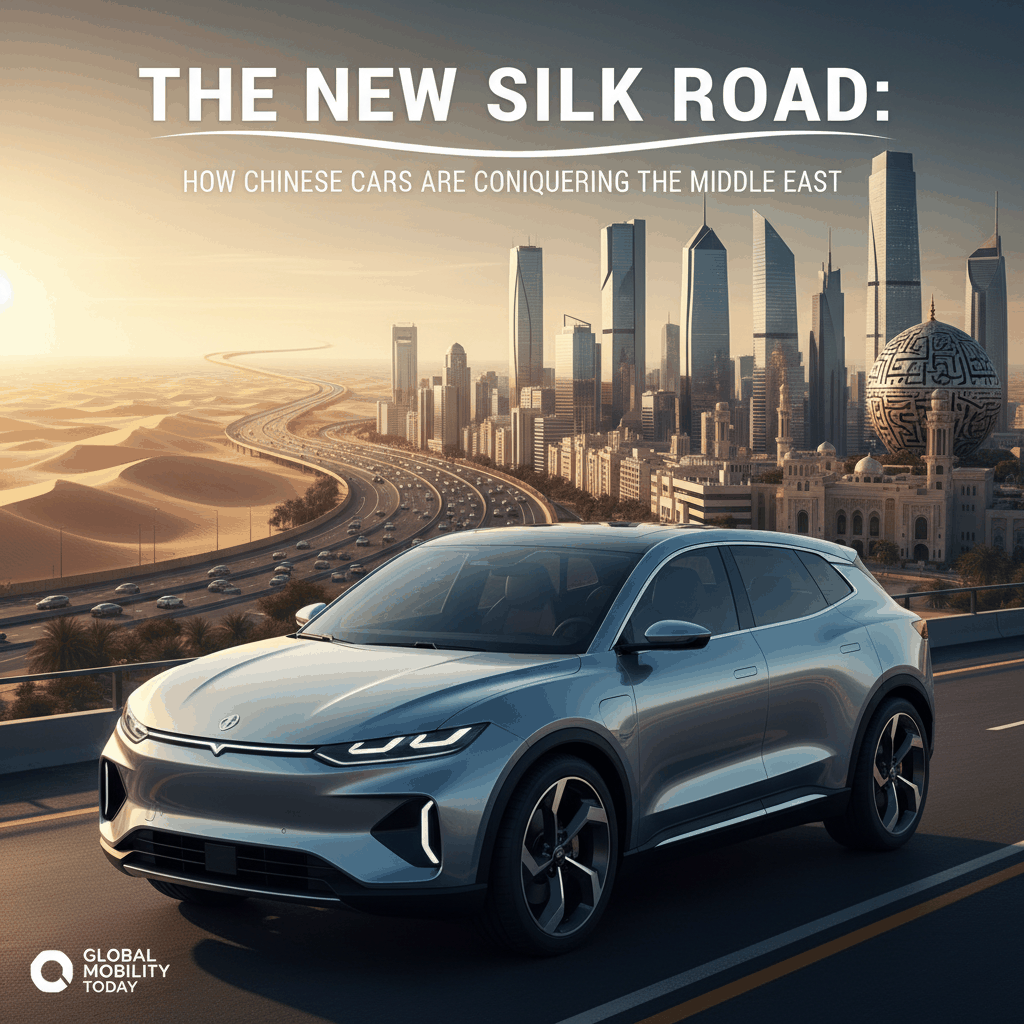
The global automotive landscape is undergoing a seismic shift, and its epicenter can be found along the trade routes connecting China to the Middle East. Once dominated by established Japanese, American, and European brands, the region’s streets are now increasingly populated by vehicles from Chinese manufacturers. This surge is more than just a sales trend; it represents a strategic reshaping of the global auto market, driven by a potent mix of competitive pricing, advanced technology, and savvy market adaptation.
This analysis will explore the key factors fueling the remarkable growth of Chinese car exports to the Middle East. We will examine how this phenomenon is challenging legacy automakers and discuss the long-term implications for the industry worldwide. The rise of Chinese brands in this crucial market is a clear signal of a new competitive era.
The Drivers Behind the Surge
The success of Chinese automakers in the Middle East is not a matter of chance. It is the result of a deliberate, multi-pronged strategy that directly addresses the needs and preferences of the region’s consumers. Several key factors are working in concert to drive this impressive growth.
Competitive Pricing and Unmatched Value
The most significant advantage for Chinese brands is their ability to offer feature-rich vehicles at highly competitive prices. Consumers in the Middle East, like everywhere else, are value-conscious. Chinese manufacturers have mastered the art of integrating modern technology and premium-feel interiors into cars that significantly undercut the prices of their established rivals.
This value proposition is difficult for many car buyers to ignore. For the cost of a base model from a traditional brand, a consumer can often purchase a top-tier Chinese vehicle equipped with a panoramic sunroof, large infotainment screens, and a full suite of advanced driver-assistance systems (ADAS). This approach has democratized access to modern automotive technology, making it a standard expectation rather than a costly luxury.
A Leap Forward in Technology and Quality
The narrative of Chinese cars being mere low-quality copies is outdated. Today’s leading Chinese automakers, such as Geely, BYD, and Chery, are investing heavily in research and development. They are producing vehicles that not only meet but often exceed international standards for quality, safety, and performance.
This commitment to innovation is particularly evident in the electric vehicle (EV) sector. As Middle Eastern governments, particularly in the UAE and Saudi Arabia, push for greener transportation, Chinese companies are perfectly positioned to meet the demand. With world-leading battery technology and mature EV platforms, they offer a range of compelling electric models that are both technologically advanced and affordable. This technological prowess extends to traditional internal combustion engine (ICE) vehicles, which feature efficient powertrains and sophisticated in-car connectivity.
Strategic Partnerships and Localization
Chinese companies understand that entering a new market requires more than just shipping cars. They have been highly effective at forming strategic partnerships with powerful local dealers and distributors across the Middle East. These local partners provide invaluable market knowledge, established sales networks, and after-sales service infrastructure, which builds consumer trust and brand credibility.
Furthermore, some manufacturers are moving toward localization. By establishing assembly plants and R&D centers within the region, they can better tailor vehicles to local conditions and preferences, such as enhancing air conditioning systems for extreme heat or tuning suspensions for local road conditions. This on-the-ground presence also helps to reduce logistical costs and navigate complex regional regulations.
Implications for Global Competitors
The rapid ascent of Chinese brands is sending shockwaves through the boardrooms of legacy automakers. For decades, companies from Japan, Germany, South Korea, and the United States have enjoyed a comfortable dominance in the Middle East. That is no longer the case.
The pressure is most intense in the budget and mid-range segments. Traditional brands are now forced to compete on price and features in a way they never have before. This could lead to a compression of profit margins or force them to cede market share in these crucial volume segments. Many are now re-evaluating their product strategies for emerging markets, recognizing that simply offering stripped-down versions of their Western models is no longer a viable strategy.
The challenge extends to the EV market as well. While many global automakers are still in the early stages of their electric transition, Chinese companies have a significant head start. Their ability to produce a wide range of EVs at various price points gives them a distinct advantage in a region that is just beginning its EV adoption curve. Global competitors risk being left behind if they cannot accelerate their own EV development and production timelines.
The Long-Term Impact on the Automotive Industry
The success of Chinese automakers in the Middle East is a preview of their global ambitions. This region is serving as a critical testing ground and a launchpad for their expansion into Europe, Latin America, and other markets.
We are witnessing the beginning of a multi-polar automotive world. The industry will no longer be dominated by a handful of players from the West and East Asia. Chinese brands are poised to become major global forces, fundamentally altering competitive dynamics. This increased competition will likely benefit consumers worldwide through lower prices, faster innovation, and a wider array of choices.
Moreover, the rise of Chinese brands will accelerate the industry’s transition to electric and connected vehicles. Their leadership in these areas will push all manufacturers to innovate more quickly. The focus will increasingly shift from mechanical engineering to software and battery technology, areas where many Chinese firms excel. This could lead to new business models centered on software-as-a-service and other digital features within the car.
A New Automotive World Order
The influx of Chinese cars into the Middle East is more than a regional sales story; it is a defining chapter in the future of the global automotive industry. By delivering an unbeatable combination of price, technology, and quality, Chinese manufacturers have successfully challenged the old guard and established a formidable presence.
For global competitors, this is a wake-up call. Complacency is not an option. They must innovate, adapt, and find new ways to deliver value to remain competitive. For consumers, the future looks bright, with more choices and advanced technology becoming accessible to all. The new Silk Road is paved with cars, and it is leading to a completely new automotive world order.