
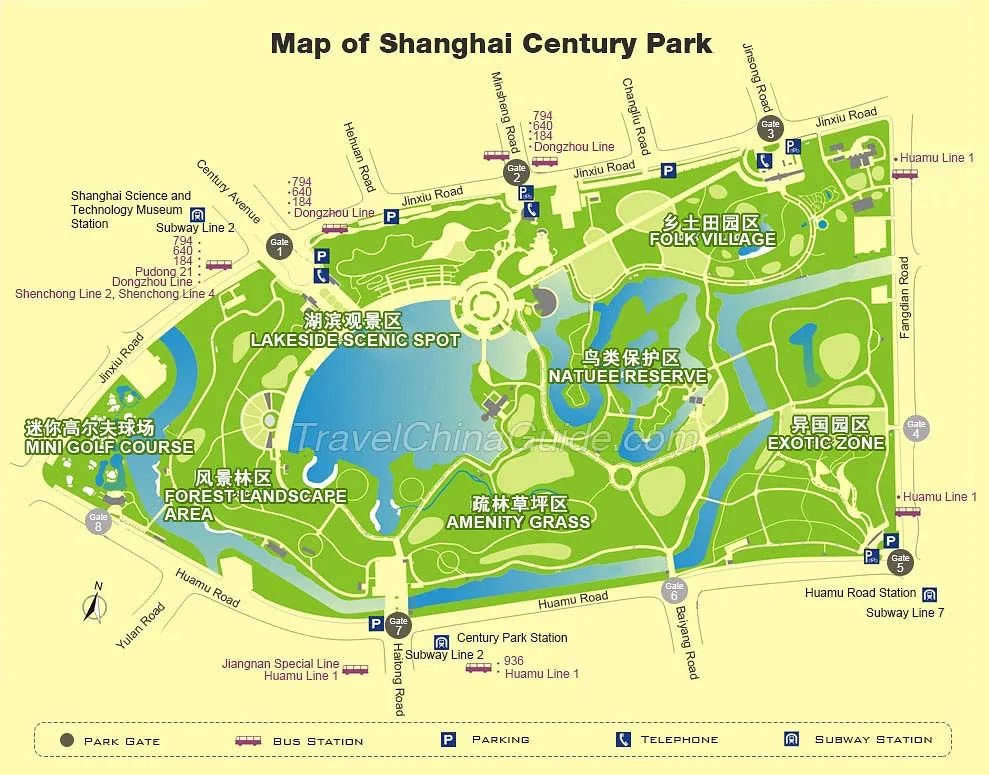
Typical Shanghai park entrance with bilingual signage and navigation maps
Shanghai has developed a sophisticated park signage system as it races toward becoming a “City of a Thousand Parks.” With 832 parks already built by 2023, including 477 city parks, 265 pocket parks, and 89 rural parks, the city has created consistent visual standards that help millions of visitors navigate these green spaces daily.
Park Entrance Signage
At Shanghai park entrances, visitors encounter clear, comprehensive information displays that set the tone for their visit. Large entrance markers present the park’s official name in both Chinese and English, often accompanied by historical background and cultural significance. Opening hours are prominently displayed, which is particularly important as many Shanghai parks now operate 24 hours a day.
Visitor guidelines appear near entrances, informing guests about park rules and etiquette. These signs explain prohibited activities, pet regulations including leash requirements, sports and recreation rules, and safety warnings. The guidelines help maintain the park environment while ensuring all visitors understand expected behavior.
Navigation maps at entrances provide detailed park layouts showing pathways, major attractions, public facilities like restrooms and rest areas, emergency exits, and distances between key points. The “You Are Here” marker helps orient visitors immediately, while bilingual text and universal symbols make the maps accessible to both Chinese and international visitors.
Wayfinding Throughout the Park
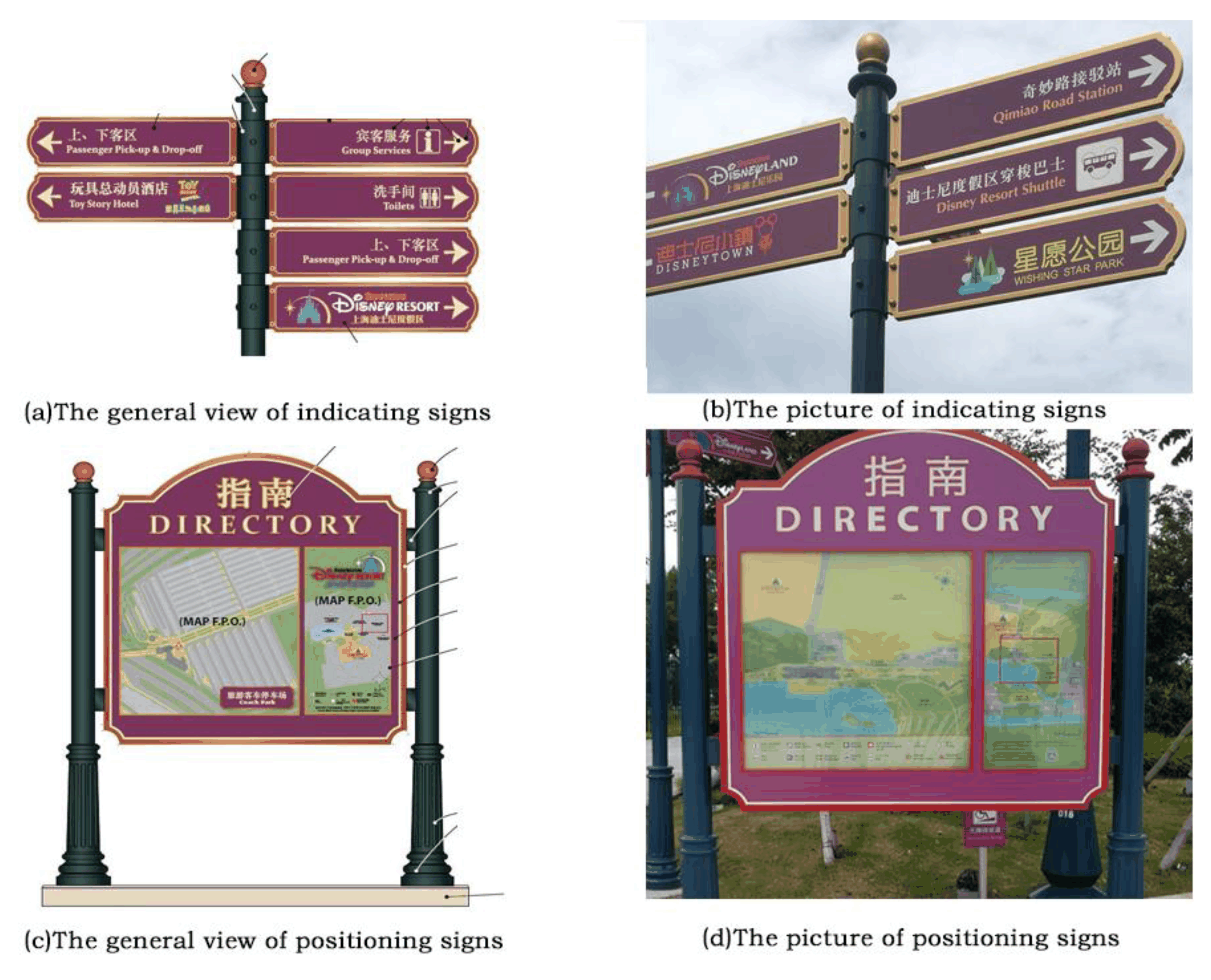
Directional signs and navigation markers throughout Shanghai parks
Shanghai parks employ comprehensive wayfinding systems using a three-level information hierarchy. Primary information directs visitors to major attractions and park entrances. Secondary information points toward service centers and restrooms. Tertiary information indicates dining areas, emergency facilities, and rest zones. Different color coding helps visitors quickly identify information priority, creating an intuitive navigation experience.
Directional signs throughout the parks use green for directions, blue for facilities, yellow or red for restrictions and hazards, and brown for cultural or historical information. Distance markers indicate walking time and meters to key destinations, helping visitors plan their routes effectively. Plant identification plaques, historical monument descriptions, and seasonal highlight notices provide educational context as visitors explore.
Modern Park Examples
Century Park transformed its signage system when it opened 24 hours in May 2024. The park removed over 3,000 meters of walls and added seven new entrances, each featuring large-format navigation maps, digital information displays, multilingual welcome signs, and real-time capacity indicators during peak times. This renovation demonstrates Shanghai’s commitment to making parks more accessible and visitor-friendly.
The World Expo Cultural Park, opened in 2024 across 2 square kilometers, showcases modern signage innovation. Interactive touchscreen directory kiosks allow visitors to search for specific locations, augmented reality navigation works through smartphone apps, and solar-powered illuminated signs ensure visibility at night. The artistic signage integrates thoughtfully into the landscape design, proving that functional wayfinding can also be aesthetically pleasing.
Shanghai’s 265+ pocket parks follow newly released design standards effective May 2025. These smaller urban green spaces feature scaled-down signage appropriate for compact areas, with focus on immediate neighborhood information and community-specific guidelines. The signs integrate seamlessly with street furniture design, maintaining consistency with the larger park system while respecting the intimate scale of neighborhood spaces.
Bilingual and International Accessibility
As China’s most international city, Shanghai ensures all park signage includes English translations alongside Chinese text. Pictographic symbols transcend language barriers, making facilities and directions understandable regardless of visitors’ language abilities. Increasingly common braille elements support visually impaired visitors, while high-contrast color combinations and large, clear fonts ensure readability.
The signage uses weather-resistant materials including stainless steel, treated wood, and anti-UV acrylic to ensure durability through Shanghai’s humid summers and cold winters. Visual consistency across parks comes from standardized color schemes, typography, and layouts, though individual parks maintain recognition of their unique historical or cultural character. The design philosophy emphasizes integration with the landscape rather than visual intrusion, creating harmonious environments where signs inform without dominating.
Digital Integration
QR codes on park signs unlock digital resources including downloadable maps, audio guides in multiple languages, real-time facility availability updates, event calendars, and emergency contact information. The Shanghai Smart Park System mobile app complements physical signs with GPS navigation within larger parks, digital plant identification features, and social sharing capabilities that let visitors document their experiences.
Real-time information displays at park entrances show weather updates, air quality indices, event announcements, capacity monitoring during peak times, and transportation connection information. This digital layer enhances the physical signage system without replacing the reliability of permanent wayfinding markers, creating a hybrid information system that serves both tech-savvy and traditional visitors.
Practical Tips for Visitors
When entering a Shanghai park, look for entrance signs and navigation maps to orient yourself. Maps appear at major pathway intersections throughout larger parks, ensuring you can reorient if needed. QR codes provide access to detailed digital resources, while visitor service centers offer printed materials for those preferring traditional maps.
The color-coded wayfinding system is intuitive once you understand the basics. Green signs point you in the right direction, blue signs help you find facilities when needed, and brown signs offer cultural enrichment through historical and botanical information. While major parks feature comprehensive English signage, smaller pocket parks may have limited English, though translation apps can easily read signs and QR codes.
Shanghai’s park signage represents a thoughtful balance between standardization and local character. Consistent visual standards ensure every park provides essential information in familiar formats, while bilingual text, accessibility features, and digital integration create truly welcoming spaces. As the city approaches its “City of a Thousand Parks” goal, these carefully designed systems help millions navigate Shanghai’s growing network of urban green spaces with ease and confidence, making the city’s parks accessible to residents and international visitors alike.
For specific park information, visit the Shanghai Greenery and Public Sanitation Bureau website or download the Shanghai Smart Park app.