
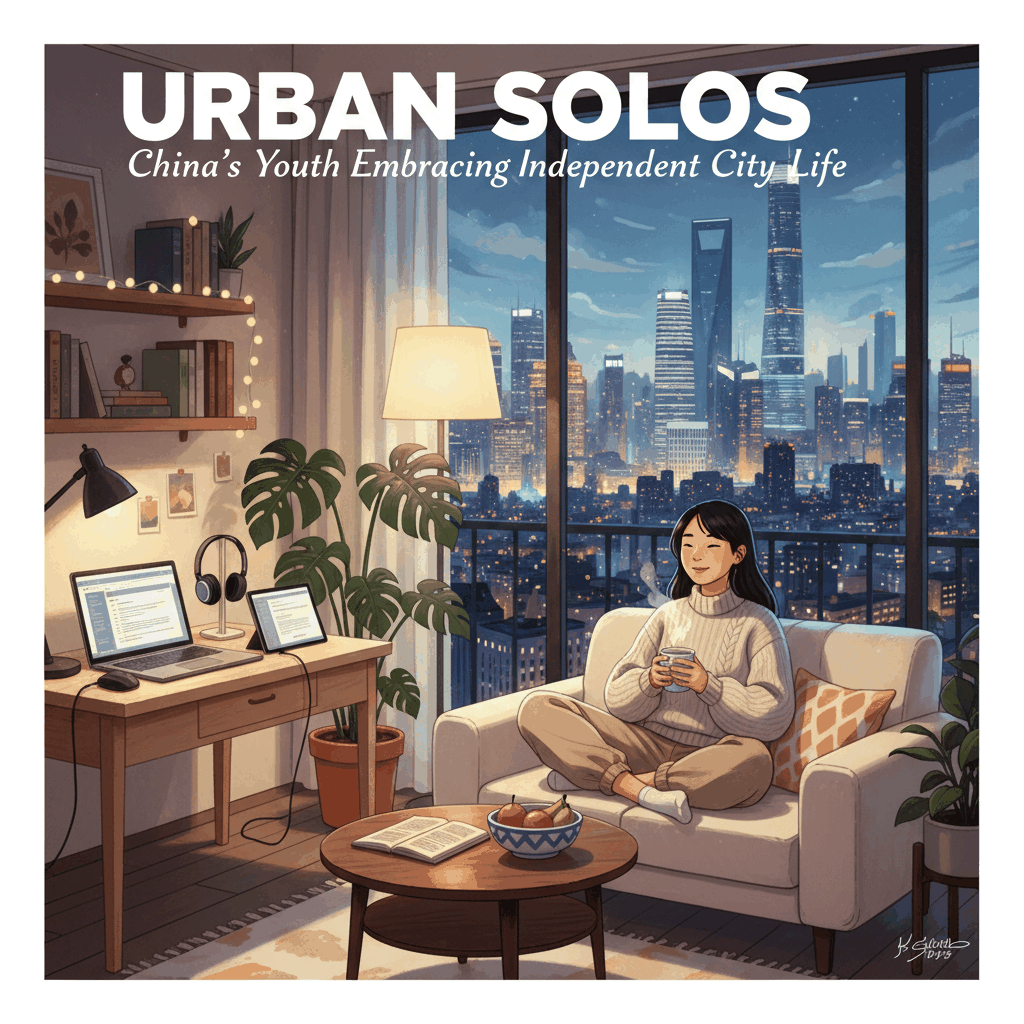
A significant social shift is quietly reshaping China’s urban landscapes. Millions of young people are choosing to live alone, a trend that is moving away from traditional multi-generational households. This move toward solitary living is more than just a change in address; it’s a reflection of deep economic, cultural, and personal transformations. The world is taking notice, as this trend offers a new window into modern Chinese society.
Why Young People Are Choosing to Live Alone
Several factors are driving this move toward solo living. For many, it is a response to intense economic pressures. The high cost of living in major cities, coupled with demanding work schedules often referred to as “996” (9 a.m. to 9 p.m., 6 days a week), leaves little time or energy for maintaining a bustling household. A small, manageable apartment for one has become a practical choice for young professionals navigating their careers.
Cultural norms are also evolving. The long-held tradition of living with parents until marriage, and sometimes even after, is becoming less common. Today’s youth, influenced by global culture and armed with a greater sense of individualism, are prioritizing personal freedom and space. They seek an environment where they can live by their own rules, pursue their own interests, and decompress from the pressures of work and social obligations. Living alone provides a sanctuary for self-discovery and independence.
A Reflection of Broader Societal Changes
This trend is a clear indicator of China’s rapid modernization. It signals a shift from a collectivist mindset to one that places a higher value on individual well-being and personal choice. This change has significant implications for various industries.
The real estate market, for instance, is adapting to this new demand. Developers are increasingly focusing on smaller, single-occupancy apartments and micro-flats in urban centers. Technology and e-commerce have also found a thriving market. Food delivery services, single-serving meal kits, and smart home devices that offer convenience and security are all tailored to the solo dweller.
The entertainment industry is also responding. The “loneliness economy” has given rise to content and services that cater to individuals. This includes everything from streaming platforms offering vast libraries of content to interactive mobile games and the growing popularity of pet ownership. These products and services provide companionship and engagement for those living on their own.
Shaping Global Perceptions
The growing trend of solo living among China’s youth is challenging outdated international perceptions. It paints a picture of a generation that is independent, self-sufficient, and forward-thinking. They are not just passive participants in their country’s economic story but are actively shaping their own lifestyles based on personal aspirations.
As more young people in China embrace this path, it sends a message to the world about the changing face of its society. This is a generation that values personal space, cherishes freedom, and is creatively navigating the complexities of modern life. Their choice to live alone is not a sign of isolation, but a confident step toward defining their own version of success and happiness.