
Key Tips
New Chinese Style, Hanfu, Cultural Experience, International Fashion
As the Lunar New Year approaches, a distinct cultural crossover is unfolding. Blonde tourists browsing the fabric stalls of Shanghai’s South Bund Light Textile Market share the scene with European influencers in Xiamen’s Gulangyu, meticulously adjusting their Hanfu robes. Together, they embody a new trend: “New Chinese” style and intangible cultural heritage Hanfu are transcending their roles as mere souvenirs to become foreign visitors’ must-have “Lunar New Year limited editions” and a new form of social currency.
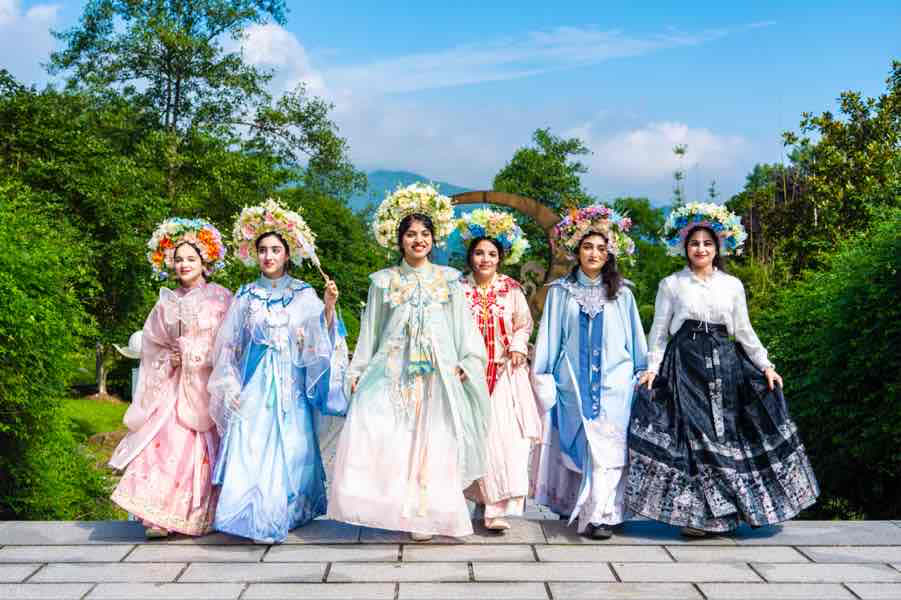
This trend signifies, first and foremost, an evolution in travel philosophy—from “sightseeing” to “immersive experience.” Travelers are no longer satisfied with mass-produced trinkets; they seek a tangible cultural imprint that resonates with their personal aesthetics. At Shanghai’s South Bund tailoring centers—ranked second on Tripadvisor’s must-visit list—visitors from Europe and America bring their own designs or favorite fashion pieces to be recreated by master tailors in luxurious silks and brocades, resulting in a custom qipao with a stand-up collar or a jacket with traditional knotted buttons that reflects their individual style. This shift is facilitated by AI-powered travel recommendations and policies like the 144-hour visa-free transit, making profound cultural experiences tangible, wearable, and personally memorable.
Secondly, the phenomenon is amplified by the dual forces of “social diffusion” and “fashion translation.” On platforms like TikTok and Xiaohongshu, the hashtag #hanfu has garnered over 16 billion views. Short videos of tourists twirling in Hanfu through ancient streets serve as dynamic, visual invitations to the world. Simultaneously, Eastern aesthetics are being reinterpreted through a global fashion lens. Major international brands consistently launch Lunar New Year collections, blending traditional elements like knotted buttons and horse patterns with contemporary Western tailoring. Meanwhile, the “Mandarin Jacket” trend popularized by Western fashion influencers incorporates relaxed silhouettes and traditional closures, seamlessly integrating Eastern elegance into everyday wear and transforming it into accessible global fashion staples.
On a deeper level, this reflects a “value leap” in cultural appeal. From the Hanfu experience itineraries specifically designed for European influencers by Xiamen’s cultural tourism authorities to international students donning Hanfu for immersive night tours in Huanggang, intangible cultural heritage attire has become a “high-touch” gateway for cultural tourism. It transforms the wearer from a passive observer into an active participant, fostering a physical understanding of the含蓄 (restrained) and飘逸 (flowing) qualities of Eastern aesthetics through the ritual of dressing. As observed by the head of a New York Hanfu society, foreign enthusiasts now proactively inquire about the historical nuances of different Hanfu dynastic styles. This journey from attire to etiquette marks the beginning of a deeper cultural engagement.
Certainly, challenges coexist with this fervor. The Hanfu market has experienced volatility, exemplified by the rapid rise and fall in popularity of the Mamianqun (horse-face skirt), highlighting the industry’s need to move beyond reliance on single viral items and focus on sustained integration of historical forms, craftsmanship, and contemporary design. Furthermore, the application of Chinese motifs by some international brands remains superficial; achieving a more meaningful cultural dialogue presents a long-term challenge.
From commissioning a custom garment to wearing a full set of traditional robes, international visitors are measuring the depth of Chinese culture with their own presence. When the “New Year’s outfit” becomes a cross-border sartorial choice, it narrates more than a fashion trend. It signals the vibrant contemporary expression of an ancient festival and its aesthetic vitality within a globalized context.