
Key Tips
At 6:30 AM, before the first rays of sunlight fully illuminate Mount Wudang, the courtyards of Yuxu Palace and Yuzhen Palace, along with neighborhood parks, already echo with the clear, resonant commands of Tai Chi practitioners. Courier Liu Peng often joins these “open classes” after his morning deliveries. He finds that practicing movements like “Cloud Hands” washes away the fatigue of his day.
At the same time, within the Shaolin Temple on Mount Song, the monks are deep into their rigorous training regimen. Shi Yongzhi, an instructor for the Shaolin Monks’ performance troupe, adheres strictly to traditional methods. He often says, “True skill in martial arts lies not in outward display but in internal cultivation.”
Shaolin: A Millennium of Zen and Martial Unity
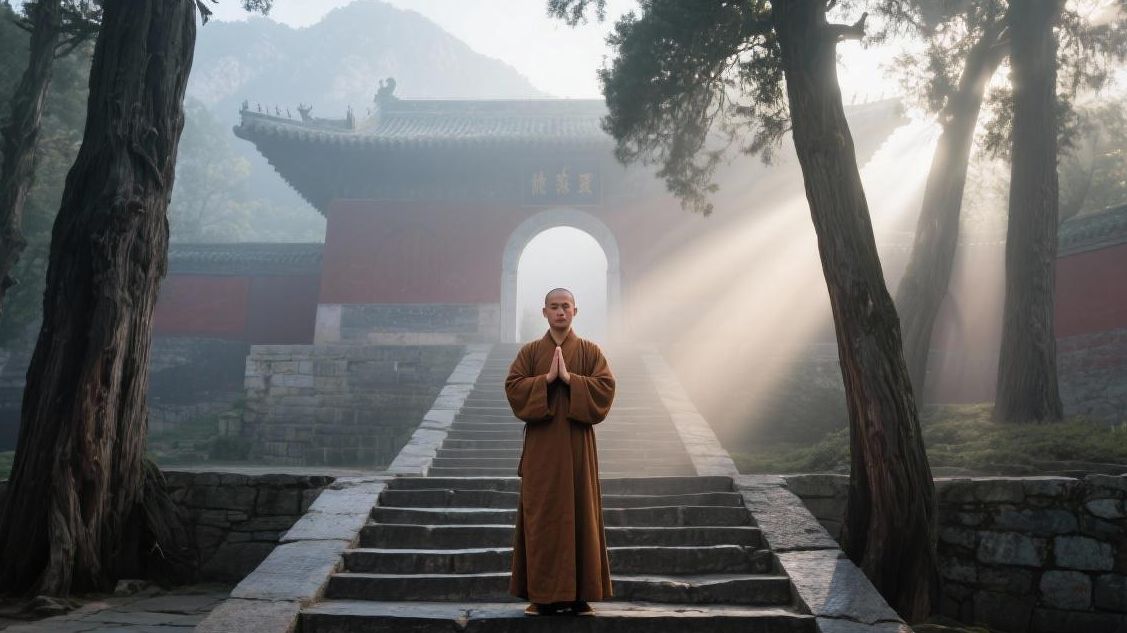
The Shaolin martial tradition traces its origins to the Northern Wei Dynasty, flourishing during the Tang and Song periods, with “the unity of Zen and martial arts” as its core philosophy. While the contemporary Shaolin Monks’ training institution was formally established in 1989, its roots extend back to the ancient monastic military training systems.
Historically, Shaolin monks participated in defending the temple during the Tang Dynasty and resisting Japanese pirates in the Ming Dynasty. Notably, Emperor Taizu of the Song Dynasty once visited the temple, dispatching generals to share their expertise and integrate strengths from Shaolin’s practices.
Today, the training institution comprises dedicated training departments and performance troupes. Its monks have participated in films and series like Shaolin Monk Soldiers. According to the Shaolin disciples’ training base, these troupes have performed in over 5,000 dedicated martial arts shows domestically and internationally, reaching a combined audience of over 100,000 spectators.
Wudang: The Soft Yet Powerful Internal School
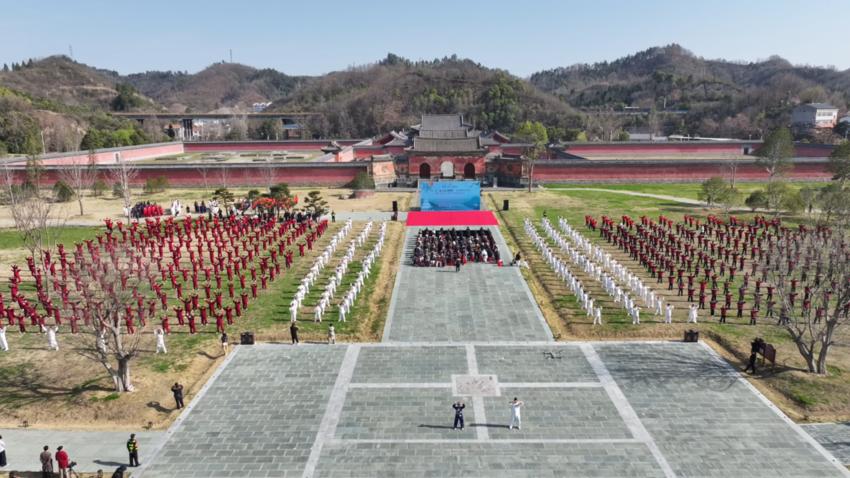
Rivaling Shaolin’s fame, Wudang martial arts, representing the “Southern reverence for Wudang,” stands alongside the “Northern respect for Shaolin” as one of China’s two great martial streams. The Wudang Taoist Traditional Martial Arts Academy, founded in 2004 by Master Yuan Xiugang, a 15th-generation inheritor of the Sanfeng style, is located beside the Yuxu Palace on Mount Wudang.
Wudang martial arts emphasize cultivating both internal spirit and external form. Its techniques are characterized by “hardness within softness” and “the harmonious balance of strength and flexibility,” carrying profound cultural and wellness value.
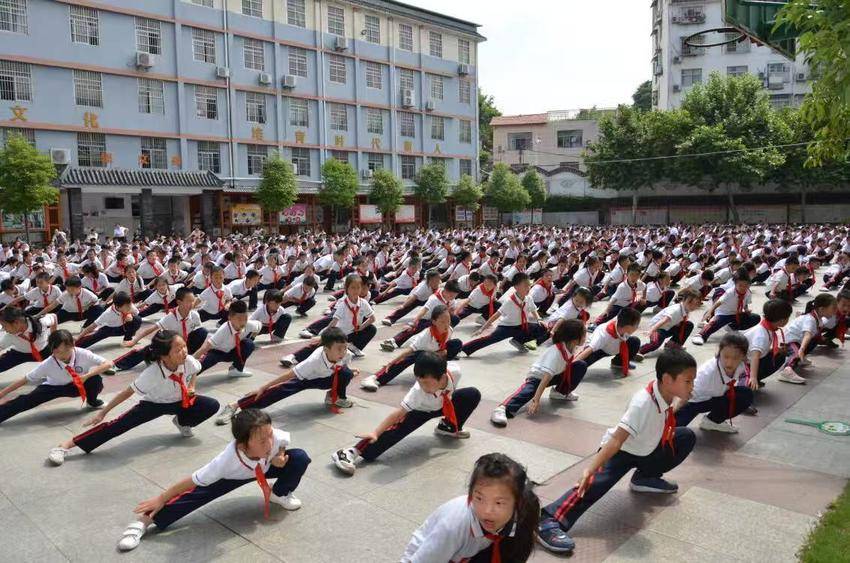
The Wudangshan Special Administrative Zone actively promotes public welfare programs like “Tai Chi Benefits the People,” bringing these practices into daily community life. Many local schools have replaced standard calisthenics with Tai Chi routines, often set to classical music like High Mountains and Flowing Water, creating a unique campus culture.
Teaching Evolution: Tradition Meets Modern Innovation
Traditional martial arts instruction is continuously evolving to meet contemporary needs. In March 2024, a unique fusion class was held in Shaolin’s Chuipu Tang (Fist Manual Hall), where Shaolin monks and a French Savate world champion taught side-by-side, with Chinese and French students learning from both disciplines.
Similar innovation is seen at Mount Wudang. Songxi Short Strikes, a Ming Dynasty internal martial arts routine, has been adapted into a simplified exercise set for students at Danan Street Primary School in Nanchong, Sichuan, since 2014.
The school developed a corresponding校本教材 (Songxi Short Strikes School-Based Textbook). By 2020, this program had nurtured 21 students who achieved awards in provincial-level martial arts competitions.
Wellness Culture: Martial Arts Fused with Healthy Living
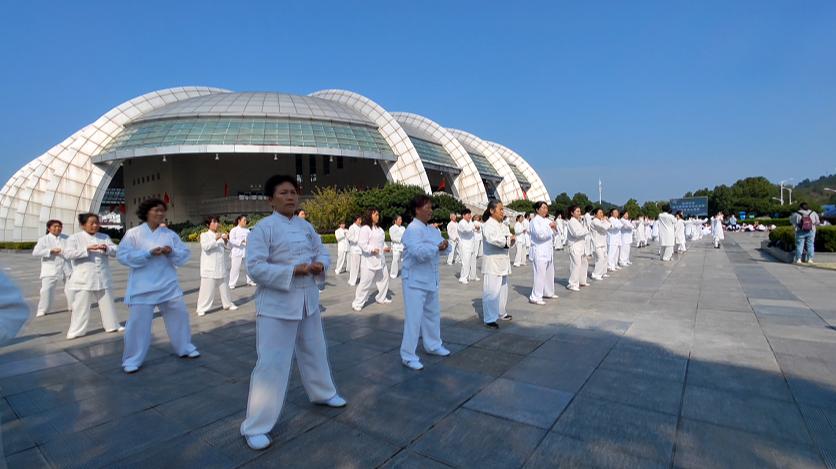
The health-preserving value of martial arts is increasingly prominent in modern society. Wudang’s public welfare courses not only transmit skills but have also become integral to residents’ healthy lifestyles.
Ms. Zhang, a 68-year-old from Laoying Community, reported significant relief from knee pain after six months of Tai Chi practice. Office worker Mr. Wang noted improved flexibility, reduced muscle tension, and better mental focus and work efficiency since starting the classes.
The Wudangshan Special Zone aims to position martial arts as “the most accessible public wellness benefit,” promoting a dual-drive strategy of “Wudang Martial Arts + National Fitness” to establish the area as a global hub for Tai Chi culture and a sanctuary for health and well-being.
On Mount Wudang’s cultural square, hundreds of residents follow the morning’s rhythmic commands in daily Tai Chi practice, seamlessly weaving this thousand-year-old art into the fabric of their lives.
Meanwhile, at the Shaolin training grounds, disciples persevere through arduous practice, perpetuating the legacy of legends like “The Thirteen Stick Monks Saving the Tang Emperor.” Within Dengfeng City, instructor Shi Yongzhi maintains his dawn training ritual amidst traditional architecture, each movement executed with focused precision.
As night falls, practitioners in Wudang’s International Martial Arts Exchange Center square move in fluid harmony with the evening. Back at Shaolin, one might still hear a master’s timeless lesson to a new student: “To learn martial arts, first tend the garden for thirty minutes!”